Reading the bill…
Our AI is translating this into plain English. Usually takes 10–15 seconds.
Reading the bill…
Our AI is translating this into plain English. Usually takes 10–15 seconds.
Latest updateJan 13, 2025
Passed/agreed to in House: On motion to suspend the rules and pass the bill Agreed to by the Yeas and Nays: (2/3 required): 405 - 5 (Roll no. 9). (text: CR H100-101)
Sponsor
Mike Ezell
Introduced
January 3, 2025
Latest action
January 14, 2025
How far this bill has traveled through Congress
Introduced
Committee
Passed Chamber
Passed Both
President
Enacted
Introduced
Bill filed in chamber
Committee
Reviewed & reported
Passed Chamber
House or Senate vote
Passed Both
House & Senate agree
President
Sent to White House
Enacted
Signed into law
Latest Action
Received in the Senate and Read twice and referred to the Committee on Homeland Security and Governmental Affairs.
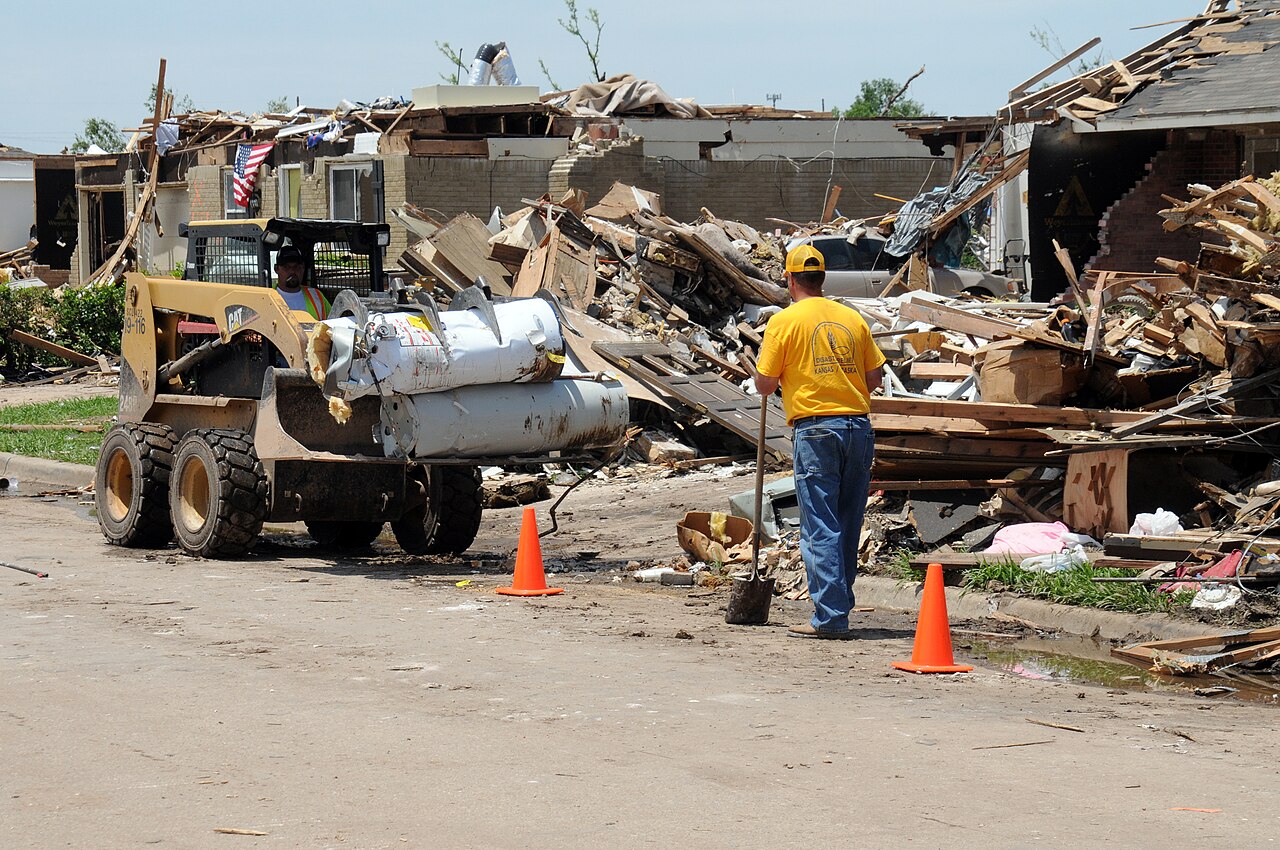
When disasters strike, multiple federal agencies collect information from affected individuals and businesses seeking assistance, often asking for overlapping or redundant details. Similarly, preliminary damage assessments—the initial evaluations that determine disaster aid eligibility—are conducted separately by different agencies, creating fragmentation and duplication. The Disaster Recovery Reform Act of 2018 established a framework for federal disaster response, but it did not address the inefficiencies in how information is gathered or how damage is assessed across agencies. These duplicative processes burden applicants, delay aid distribution, and waste government resources.
The Federal Disaster Assistance Coordination Act directs the Federal Emergency Management Agency (FEMA) Administrator, working with the Small Business Administration, Department of Housing and Urban Development, Department of Labor, Office of Management and Budget, Department of Health and Human Services, Department of Transportation, and other relevant agencies, to conduct a comprehensive study within two years. FEMA must develop a plan to streamline and consolidate information collection from disaster applicants and grantees, reducing duplication and administrative burden. The Administrator must also establish a working group to identify overlaps in preliminary damage assessments, evaluate whether a single federal agency could conduct all assessments, and explore emerging technologies like unmanned aircraft systems to speed up the assessment process.
FEMA must submit a comprehensive report to Congress within two years containing the streamlining plans and working group findings, along with any recommendations. The report will be made publicly available on FEMA's website in downloadable and machine-readable formats. Within 180 days after submitting the report, FEMA and the Council of the Inspectors General on Integrity and Efficiency must brief congressional committees on the findings. The study itself does not mandate immediate changes to disaster assistance processes; rather, it creates a roadmap for potential future reforms that Congress and FEMA can use to improve efficiency in federal disaster response.
Disaster victims and businesses currently navigate multiple federal agencies requesting duplicate information, slowing aid delivery and creating confusion. This study will identify how to consolidate those requests and streamline preliminary damage assessments, potentially reducing administrative delays and making federal disaster assistance more efficient. The resulting recommendations could reshape how federal agencies coordinate disaster response going forward.
Disaster survivors and small business owners seeking federal assistance will benefit most directly from streamlined information collection and faster damage assessments. Federal Emergency Management Agency staff and employees of the Small Business Administration, Department of Housing and Urban Development, Department of Labor, and other disaster-response agencies will be affected by any future coordination changes. State and local emergency management officials who work with federal agencies during disaster declarations will also experience changes in how preliminary damage assessments are conducted.
<DOC>
119th CONGRESS
  1st Session
                                H. R. 152

                   IN THE SENATE OF THE UNITED STATES

                            January 14, 2025

Received; read twice and referred to the Committee on Homeland Security
                        and Governmental Affairs

                                 AN ACT


 To amend the Disaster Recovery Reform Act of 2018 to develop a study
  regarding streamlining and consolidating information collection and
        preliminary damage assessments, and for other purposes.

    Be it enacted by the Senate and House of Representatives of the
United States of America in Congress assembled,

SECTION 1. SHORT TITLE.

    This Act may be cited as the ``Federal Disaster Assistance
Coordination Act''.

SEC. 2. STUDY TO STREAMLINE AND CONSOLIDATE INFORMATION COLLECTION AND
              PRELIMINARY DAMAGE ASSESSMENTS.

    (a) In General.--Section 1223 of the Disaster Recovery Reform Act
of 2018 (Public Law 115-254) is amended to read as follows:

``SEC. 1223. STUDY TO STREAMLINE AND CONSOLIDATE INFORMATION COLLECTION
              AND PRELIMINARY DAMAGE ASSESSMENTS.

    ``(a) Information Collection.--Not later than 2 years after the
date of enactment of this section, the Administrator, in coordination
with the Small Business Administration, the Department of Housing and
Urban Development, the Disaster Assistance Working Group of the Council
of the Inspectors General on Integrity and Efficiency, and other
appropriate agencies, shall--
            ``(1) conduct a study and develop a plan, consistent with
        law, under which the collection of information from disaster
        assistance applicants and grantees will be modified,
        streamlined, expedited, efficient, flexible, consolidated, and
        simplified to be less burdensome, duplicative, and time
        consuming for applicants and grantees; and
            ``(2) develop a plan for the regular collection and
        reporting of information on Federal disaster assistance
        awarded, including the establishment and maintenance of a
        website for presenting the information to the public.
    ``(b) Preliminary Damage Assessments.--Not later than 2 years after
the date of enactment of this section, the Administrator, in
consultation with the Council of the Inspectors General on Integrity
and Efficiency, shall convene a working group on a regular basis with
the Secretary of Labor, the Director of the Office of Management and
Budget, the Secretary of Health and Human Services, the Administrator
of the Small Business Administration, the Secretary of Transportation,
the Assistant Secretary of Commerce for Economic Development, and other
appropriate agencies as the Administrator considers necessary, to--
            ``(1) identify and describe the potential areas of
        duplication or fragmentation in preliminary damage assessments
        after disaster declarations;
            …
Auto-Whip
Built from official statements, public releases, and voting records where they exist. Members without enough evidence are marked as no position.
Members whose public record points toward backing the bill.
Brian Schatz
D-Hawaii
Senator Schatz's website emphasizes disaster assistance and recovery resources, particularly related to recent Hawaii disasters (Kona Low Storms, Lahaina). His content shows active engagement with FEMA assistance coordination and advocacy for 'long-term support for recovery.' However, there is no explicit mention of the Federal Disaster Assistance Coordination Act specifically. The general focus on disaster response and coordination, combined with his Democratic affiliation (which typically supports federal disaster assistance programs), suggests likely support. The low confidence reflects the absence of direct statements about this particular bill. More specific voting record or press releases would be needed to confirm.
Official websiteMembers whose public record points toward opposition.
Rand Paul
R-Kentucky
While no explicit statement about the Federal Disaster Assistance Coordination Act appears in the public record, Rand Paul's general policy positions suggest likely skepticism. His website emphasizes fiscal conservatism (displays national debt prominently), promotes the REINS Act (limiting executive regulations), and the 'Bonuses for Cost-Cutters Act' (reducing government waste). These positions suggest he would scrutinize any expansion of federal disaster assistance programs as potentially wasteful or fiscally irresponsible. However, the website also lists 'Disaster Relief' as a service he provides to constituents, indicating he acknowledges disaster assistance as a legitimate function. Without direct evidence of his stance on this specific bill, confidence is moderate. His libertarian-leaning philosophy typically opposes expansive federal programs, but disaster relief is a traditionally bipartisan issue where even conservative senators sometimes show support.
Official websiteMembers we are still tracking, but without enough public evidence yet.
Angela Alsobrooks
D-Maryland
Alan Armstrong
R-Oklahoma
Tammy Baldwin
D-Wisconsin
Jim Banks
R-Indiana
John Barrasso
R-Wyoming
Michael Bennet
D-Colorado
Marsha Blackburn
R-Tennessee
Richard Blumenthal
D-Connecticut
Lisa Blunt Rochester
D-Delaware
Cory Booker
D-New Jersey
John Boozman
R-Arkansas
Katie Britt
R-Alabama
Ted Budd
R-North Carolina
Maria Cantwell
D-Washington
Shelley Capito
R-West Virginia
Bill Cassidy
R-Louisiana
Susan Collins
R-Maine
Christopher Coons
D-Delaware
John Cornyn
R-Texas
Catherine Cortez Masto
D-Nevada
Tom Cotton
R-Arkansas
Kevin Cramer
R-North Dakota
Mike Crapo
R-Idaho
Ted Cruz
R-Texas
John Curtis
R-Utah
Steve Daines
R-Montana
Tammy Duckworth
D-Illinois
Richard Durbin
D-Illinois
Joni Ernst
R-Iowa
John Fetterman
D-Pennsylvania
Deb Fischer
R-Nebraska
Ruben Gallego
D-Arizona
Kirsten Gillibrand
D-New York
Lindsey Graham
R-South Carolina
Chuck Grassley
R-Iowa
Bill Hagerty
R-Tennessee
Maggie Hassan
D-New Hampshire
Josh Hawley
R-Missouri
Martin Heinrich
D-New Mexico
John Hickenlooper
D-Colorado
Mazie Hirono
D-Hawaii
John Hoeven
R-North Dakota
Jon Husted
R-Ohio
Cindy Hyde-Smith
R-Mississippi
Ron Johnson
R-Wisconsin
James Justice
R-West Virginia
Timothy Kaine
D-Virginia
Mark Kelly
D-Arizona
John Kennedy
R-Louisiana
Andy Kim
D-New Jersey
Angus King
I-Maine
Amy Klobuchar
D-Minnesota
James Lankford
R-Oklahoma
Mike Lee
R-Utah
Ben Luján
D-New Mexico
Cynthia Lummis
R-Wyoming
Edward Markey
D-Massachusetts
Roger Marshall
R-Kansas
Mitch McConnell
R-Kentucky
David McCormick
R-Pennsylvania
Jeff Merkley
D-Oregon
Ashley Moody
R-Florida
Jerry Moran
R-Kansas
Bernie Moreno
R-Ohio
Markwayne Mullin
R-Oklahoma
Lisa Murkowski
R-Alaska
Christopher Murphy
D-Connecticut
Patty Murray
D-Washington
Jon Ossoff
D-Georgia
Alex Padilla
D-California
Gary Peters
D-Michigan
John Reed
D-Rhode Island
Pete Ricketts
R-Nebraska
James Risch
R-Idaho
Jacky Rosen
D-Nevada
Mike Rounds
R-South Dakota
Marco Rubio
R-Florida
Bernie Sanders
I-Vermont
Adam Schiff
D-California
Eric Schmitt
R-Missouri
Charles Schumer
D-New York
Rick Scott
R-Florida
Tim Scott
R-South Carolina
Jeanne Shaheen
D-New Hampshire
Tim Sheehy
R-Montana
Elissa Slotkin
D-Michigan
Tina Smith
D-Minnesota
Dan Sullivan
R-Alaska
John Thune
R-South Dakota
Thomas Tillis
R-North Carolina
Tommy Tuberville
R-Alabama
Chris Van Hollen
D-Maryland
J. Vance
R-Ohio
Mark Warner
D-Virginia
Raphael Warnock
D-Georgia
Elizabeth Warren
D-Massachusetts
Peter Welch
D-Vermont
Sheldon Whitehouse
D-Rhode Island
Roger Wicker
R-Mississippi
Ron Wyden
D-Oregon
Todd Young
R-Indiana
2 members formally endorsed
Cosponsored this bill
Source: cosponsors
No position data available yet
Source: cosponsors
Cosponsor data and vote records sourced from Congress.gov. Reflects formal legislative actions only.