Law Desk
Law Bills
6 bills in the Law desk, ordered for current relevance and readability.
LawHR-100-119Latest action: Jan 3, 20258 readersIn Committee
Protect the Gig Economy Act of 2025
Sponsored by Andy Biggs
Under current federal civil procedure rules, class actions can proceed when four conditions are met: the class is so large that individual suits would be impractical, common questions of law or fact predominate, the named plaintiffs' claims are typical of the class, and the plaintiffs can fairly represent the class's interests. Class actions have become a significant tool for workers and consumers to challenge business practices collectively, including disputes over worker classification. Gig economy companies and contractors argue that class litigation creates substantial legal costs and uncertainty, even when claims lack merit. This bill amends Rule 23 of the Federal Rules of Civil Procedure by adding a fifth requirement: class actions cannot proceed if they allege that workers have been misclassified as independent contractors rather than employees. The amendment operates through the federal judiciary system, which applies these procedural rules in all federal courts. By inserting this new barrier, the bill prevents workers from joining together in class actions to challenge their classification status, effectively requiring them to pursue individual lawsuits instead. The change takes effect immediately upon enactment and applies to all pending and future class action cases in federal court involving contractor misclassification claims. No new funding is required, as the amendment simply modifies existing procedural rules. The practical effect is substantial: workers seeking to challenge their employment status lose the ability to aggregate claims, making litigation economically unfeasible for most individuals. This shifts leverage toward gig economy platforms and contractor-reliant businesses by eliminating a primary mechanism through which workers collectively challenge classification decisions.
Law
Latest updateJan 3, 2025
Referred to the House Committee on the Judiciary.
Law
LawHJRES-1-119Latest action: Jan 3, 20252 readersIn Committee
Proposing an amendment to the Constitution of the United States to require that the Supreme Court of the United States be composed of nine justices.
Sponsored by Andy Biggs
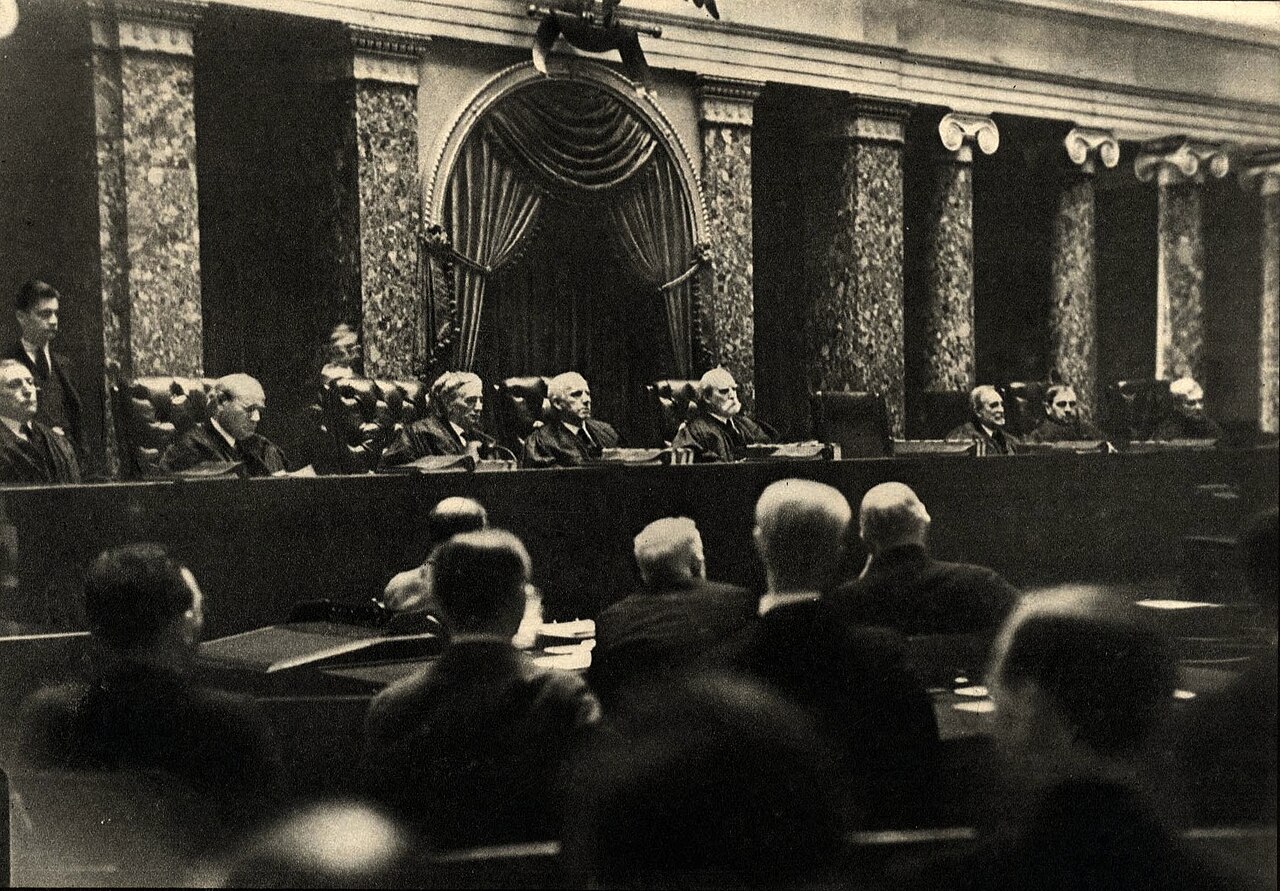
Currently, the U.S. Constitution does not specify the exact number of Supreme Court justices. The number has varied over time, with the Judiciary Act of 1869 establishing six associate justices, making a total of nine justices. This number has remained unchanged since then, but it is not constitutionally mandated. This bill proposes an amendment to the Constitution to mandate that the Supreme Court be composed of nine justices: one chief justice and eight associate justices. The amendment would require the approval of two-thirds of both the House of Representatives and the Senate, followed by ratification by three-fourths of the state legislatures. If ratified, this amendment would ensure that the Supreme Court maintains a consistent number of nine justices. This change would provide stability and predictability in the Court's composition, potentially affecting how cases are heard and decided. The amendment would not alter the existing roles or powers of the justices but would solidify the current structure of the Court.
Law
Latest updateJan 3, 2025
Referred to the House Committee on the Judiciary.
Law
LawHR-97-119Latest action: Jan 3, 20251 readersIn Committee
Injunctive Authority Clarification Act of 2025
Sponsored by Andy Biggs
Currently, federal courts can issue injunctions that apply nationwide, blocking enforcement of federal laws, regulations, or policies against parties not directly involved in the lawsuit. These so-called "national injunctions" have become increasingly common in recent years, with judges in individual cases issuing orders that effectively halt government action across the entire country. The practice raises questions about judicial authority: whether a single judge in one district should have power to stop enforcement of a law everywhere, and whether non-parties to a case should be bound by an injunction they had no opportunity to contest in court. The Injunctive Authority Clarification Act of 2025 amends title 28 of the United States Code by adding a new section 2285 that prohibits federal courts from issuing orders restraining enforcement of any statute, regulation, or similar authority against parties not involved in the lawsuit, unless those non-parties are represented by a party already in the case acting in a representative capacity under the Federal Rules of Civil Procedure. The prohibition applies to all federal courts, including district courts in the Virgin Islands, Guam, and the Northern Mariana Islands. The bill essentially requires that injunctions bind only the parties to a case or those formally represented through established procedural mechanisms. The change takes effect upon enactment with no specified implementation period or funding requirements. Courts would immediately apply the new restriction when considering whether to issue injunctions. The practical effect would narrow the geographic scope of many injunctions, potentially limiting their reach to the parties before the court or their representatives. This could mean that government agencies facing an injunction in one district might continue enforcing a policy in other districts, creating a patchwork of enforcement across the country. Existing injunctions issued before enactment would not be automatically affected, though their validity under the new standard could be subject to future legal challenge.
Law
Latest updateJan 3, 2025
Referred to the House Committee on the Judiciary.
Law
LawHR-101-119Latest action: Jan 3, 20250 readersIn Committee
Judicial Administration and Improvement Act of 2025
Sponsored by Andy Biggs
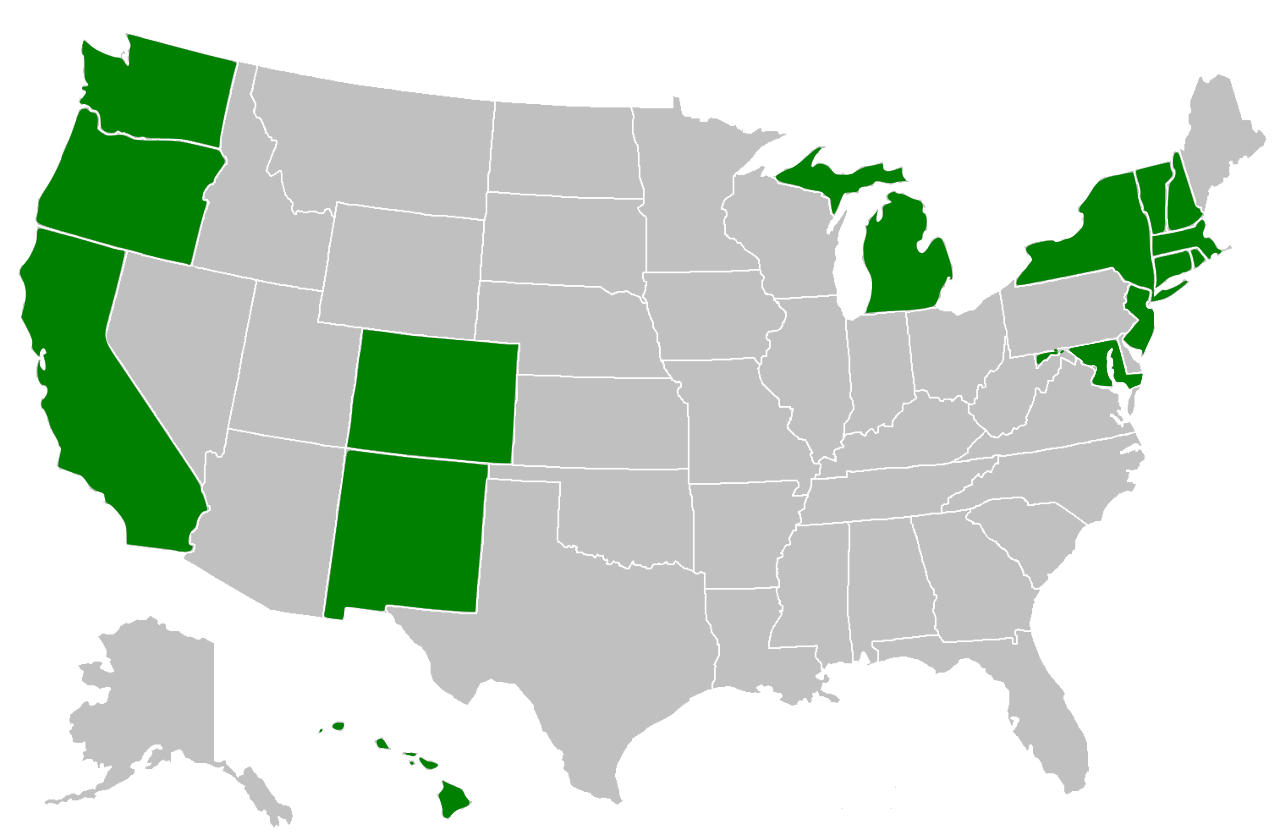
The Ninth Circuit Court of Appeals currently covers a vast geographic territory spanning nine western states and Pacific territories: California, Oregon, Washington, Hawaii, Alaska, Idaho, Montana, Nevada, Arizona, Guam, and the Northern Mariana Islands. This makes it the largest federal appellate circuit by both geography and caseload. Under current law codified in title 28 of the United States Code, the circuit has 29 authorized judgeships and maintains courthouses in San Francisco, Seattle, Portland, Pasadena, Las Vegas, Phoenix, and Honolulu. The circuit's size has long raised concerns about administrative efficiency and case management across such disparate regions. This bill amends title 28 to divide the Ninth Circuit into two separate circuits, effective one year after enactment. The new Ninth Circuit will comprise California, Hawaii, Oregon, Washington, Guam, and the Northern Mariana Islands, with 21 authorized judgeships. A new Twelfth Circuit will be established covering Alaska, Arizona, Idaho, Montana, and Nevada, with 8 authorized judgeships. The bill requires existing Ninth Circuit judges whose duty stations are in the five-state region to be automatically assigned to the Twelfth Circuit, though they may elect to remain with the new Ninth Circuit. Judges in the Pacific region remain with the new Ninth Circuit. Senior judges in the five-state region may choose their circuit assignment. Implementation occurs over a two-year transition period, with the old Ninth Circuit maintaining administrative functions for two years post-enactment. The Twelfth Circuit will establish courthouses in Las Vegas, Phoenix, Anchorage, and Missoula. When judges from the five-state region retire, the President shall appoint additional Twelfth Circuit judges to fill those vacancies. Judges who elect to stay with the new Ninth Circuit trigger appointments of temporary Twelfth Circuit judges to offset the loss. Congress authorizes appropriations for facilities, space, and staffing needed to support the new circuit structure. Pending cases filed before the effective date transfer to whichever circuit would have heard them under the new structure, ensuring continuity of litigation.
Law
Latest updateJan 3, 2025
Referred to the House Committee on the Judiciary.
Law
LawHR-162-119Latest action: Jan 3, 20250 readersIn Committee
First Amendment Accountability Act
Sponsored by Harriet Hageman
Currently, federal employees generally cannot be sued individually for damages when they violate citizens' constitutional rights. Instead, injured parties must sue the federal government itself under the Federal Tort Claims Act or seek relief through other limited channels. The President and Vice President have absolute immunity from civil suits for official acts. Other federal employees have qualified immunity—a legal doctrine that shields them from personal liability unless they violated a "clearly established" constitutional right. This framework has made it difficult for citizens to hold individual federal workers accountable for First Amendment violations, since proving a right was "clearly established" at the time of the alleged violation is a high bar. The First Amendment Accountability Act establishes a direct right of action against individual federal employees for First Amendment violations. The bill requires that any federal employee—defined as any individual in the executive branch except the President and Vice President—who deprives a person of First Amendment rights "under color of" federal authority becomes liable for damages. The mechanism allows injured parties to sue the employee directly in federal court for redress. Courts may award reasonable attorney's fees to the prevailing party, other than the United States, creating an incentive for plaintiffs to pursue claims. Critically, the bill does not permit federal employees to sue their own employer or the federal government for conduct within the scope of their employment. In practice, this creates a new avenue for litigation against federal workers. Citizens alleging First Amendment violations—such as censorship, retaliation for speech, or interference with assembly—could file civil suits against the individual employee rather than the government. The bill takes effect upon enactment and requires no new appropriations; it operates through the existing federal court system. The change could significantly increase litigation against federal employees, potentially affecting agencies involved in speech regulation, law enforcement, and national security. Federal agencies may face pressure to revise training and policies to reduce exposure to personal liability, and the federal government might increase indemnification or legal defense costs for employees facing such suits.
Law
Latest updateJan 3, 2025
Referred to the House Committee on the Judiciary.
Law
LawHR-99-119Latest action: Jan 3, 20250 readersIn Committee
Protecting Businesses From Frivolous COVID Lawsuits Act of 2025
Sponsored by Andy Biggs
Federal courts currently apply standard negligence law to COVID-19 transmission cases, allowing juries to evaluate whether a business owner or operator failed to take reasonable precautions against virus spread. Under existing tort principles, plaintiffs can argue that defendants breached a duty of care by, for example, failing to implement safety measures, and juries decide whether the defendant's conduct fell below what a reasonably careful person would have done. These cases have proceeded through federal courts since the pandemic began, with outcomes varying based on specific facts and local interpretations of negligence standards. This bill requires federal courts to provide a mandatory jury instruction in any COVID-19 negligence case that changes the legal standard. The instruction mandates that courts tell juries that simply opening a business is reasonable as a matter of law and that negligence cannot be found based solely on the act of holding oneself open for business. This effectively shields businesses from liability for the mere decision to operate during the pandemic, regardless of what specific safety measures—or lack thereof—the business implemented. The instruction applies to all federal civil actions alleging negligence from COVID-19 transmission where damages are sought. The change takes effect immediately upon enactment and applies to all pending and future federal COVID-19 negligence cases. No new funding is required, as courts already conduct jury instructions as part of standard litigation procedures. The practical effect narrows the scope of negligence claims significantly: plaintiffs would need to prove not just that a business operated, but that it took specific actions or failed to take specific precautions that fell below reasonable care—a higher evidentiary burden than current law requires. This may reduce the number of COVID-19 cases filed in federal court and increase dismissal rates for claims that rely primarily on the defendant's decision to remain open for business.
Law
Latest updateJan 3, 2025
Referred to the House Committee on the Judiciary.
Law