Reading the bill…
Our AI is translating this into plain English. Usually takes 10–15 seconds.
Reading the bill…
Our AI is translating this into plain English. Usually takes 10–15 seconds.
Latest updateJan 3, 2025
Passed/agreed to in House: On agreeing to the resolution Agreed to without objection.
Sponsor
John Thune
Introduced
January 3, 2025
Latest action
January 3, 2025
How far this bill has traveled through Congress
Introduced
Committee
Passed Chamber
Passed Both
President
Enacted
Introduced
Bill filed in chamber
Committee
Reviewed & reported
Passed Chamber
House or Senate vote
Passed Both
House & Senate agree
President
Sent to White House
Enacted
Signed into law
Latest Action
Motion to reconsider laid on the table Agreed to without objection.
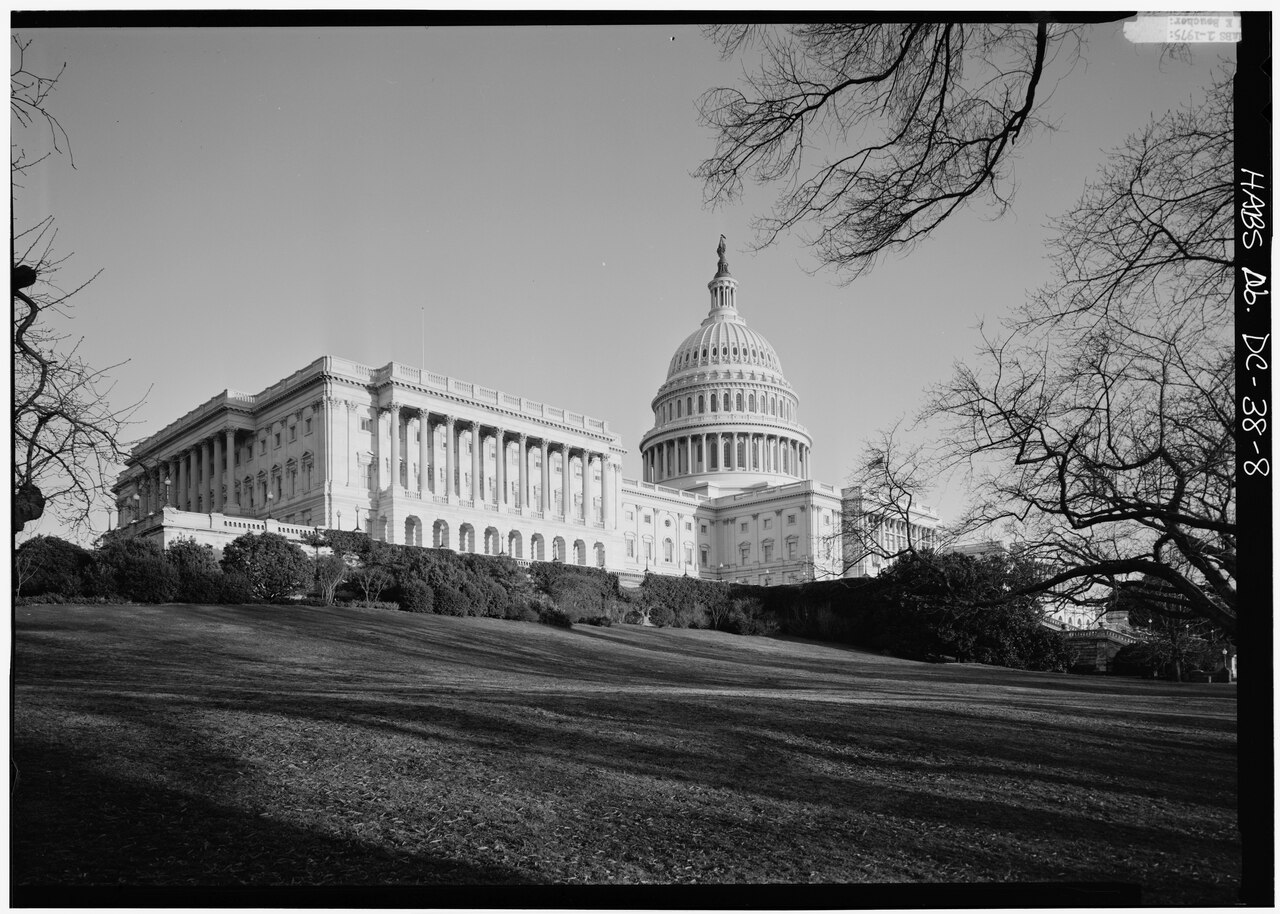
The Joint Congressional Committee on Inaugural Ceremonies is a temporary body created by Congress to oversee the logistical and ceremonial arrangements for presidential inaugurations. This committee operates under authority granted through Senate Concurrent Resolutions and typically expires after each inauguration concludes. The committee coordinates with Capitol Police, the Secret Service, and other federal agencies to manage security, seating, processions, and the overall execution of the inauguration ceremony on the Capitol steps and surrounding grounds.
This concurrent resolution reauthorizes the Joint Congressional Committee on Inaugural Ceremonies, extending its authority beyond the previous authorization that expired after the 2024 inauguration. The resolution continues the committee with the same powers and responsibilities established under Senate Concurrent Resolution 34 of the 118th Congress, allowing it to make necessary arrangements for the 2025 presidential inauguration. Additionally, the resolution reauthorizes the committee's use of Capitol facilities, including the rotunda and Emancipation Hall, as specified in Senate Concurrent Resolution 35 of the 118th Congress, ensuring the committee can conduct inaugural proceedings and ceremonies in these spaces.
The reauthorization takes effect immediately on January 3, 2025, the date Congress convenes for the new session. No new funding is required, as the committee operates under existing appropriations and relies on coordination with established federal agencies already responsible for inaugural security and logistics. The resolution has no sunset date specified, meaning the committee's authority continues through the completion of the 2025 inauguration ceremonies. This reauthorization is routine and occurs before each presidential inauguration to ensure Congress has formally delegated the necessary authority to coordinate what is constitutionally one of the government's most significant ceremonial events.
Without this reauthorization, Congress would lack formal authority to delegate inaugural planning responsibilities to a coordinating committee, potentially creating gaps in the chain of command for security, logistics, and ceremony management. The resolution ensures continuity of planning authority and guarantees that the committee can legally access and use Capitol facilities for inaugural events. This prevents administrative confusion and ensures the inauguration proceeds with clear congressional authorization backing all arrangements.
Members of Congress serving on the Joint Congressional Committee on Inaugural Ceremonies are directly affected, as their authority to coordinate inaugural arrangements depends on this reauthorization. Capitol Police and the Secret Service benefit from clear congressional authorization defining the committee's role in security and logistics planning. The President-elect, Vice President-elect, and attendees at the inauguration are indirectly affected through the committee's ability to organize and execute the ceremony. Federal agencies involved in inaugural support, including the Department of Defense and the General Services Administration, rely on this authorization to coordinate their respective roles.
S.Con.Res.1
                                       Agreed to January 3, 2025

                     One Hundred Nineteenth Congress

                                 of the

                        United States of America

                          AT THE FIRST SESSION

           Begun and held at the City of Washington on Friday,
         the third day of January, two thousand and twenty five

                          Concurrent Resolution

    Resolved by the Senate (the House of Representatives concurring),

SEC. 1. REAUTHORIZATION OF JOINT COMMITTEE.

    Effective from January 3, 2025, the joint committee created by
Senate Concurrent Resolution 34 (118th Congress), to make the necessary
arrangements for the inauguration of the President-elect and the Vice
President-elect of the United States, is continued with the same power
and authority provided for in that resolution.

SEC. 2. USE OF CAPITOL.

    Effective from January 3, 2025, the provisions of Senate Concurrent
Resolution 35 (118th Congress), to authorize the use of the rotunda and
Emancipation Hall of the Capitol by the Joint Congressional Committee
on Inaugural Ceremonies in connection with the proceedings and
ceremonies conducted for the inauguration of the President-elect and
the Vice President-elect of the United States are continued with the
same power and authority provided for in that resolution.
Auto-Whip
Built from official statements, public releases, and voting records where they exist. Members without enough evidence are marked as no position.
Members whose public record points toward backing the bill.
No members in this group yet.
Members whose public record points toward opposition.
Rand Paul
R-Kentucky
While no explicit statement on this specific bill appears in the public record, Rand Paul's consistent political positioning suggests skepticism toward this measure. His website emphasizes fiscal conservatism (displaying national debt counter prominently), supports bills focused on government efficiency and cost-cutting (e.g., 'Bonuses for Cost-Cutters Act,' 'REINS Act' to limit regulations), and reflects a libertarian philosophy critical of expanding government operations. A concurrent resolution merely extending an existing congressional committee's life would likely conflict with his stated priorities of limiting federal spending and bureaucratic overhead. However, this is not an explicit rejection—the bill is ceremonial in nature and relatively low-cost, which tempers confidence in predicting strong opposition.
Official websiteMike Lee
R-Utah
While there is no explicit statement about this specific bill on the provided website content, Mike Lee's demonstrated policy positions suggest skepticism toward this measure. His website emphasizes: (1) repealing outdated government spending, (2) cutting financial red tape and burdensome regulations, and (3) reducing government overhead. A concurrent resolution extending the life of a Joint Congressional Committee on Inaugural Ceremonies represents ongoing government spending and bureaucratic continuity. Lee's libertarian-leaning, fiscal-conservative approach to reducing government size and spending suggests he would likely oppose or be indifferent to extending ceremonial committee operations. However, confidence is moderate because this is an inference from general principles rather than explicit positions, and inaugural ceremonies have bipartisan ceremonial significance that might warrant support despite his fiscal concerns.
Official websiteMembers we are still tracking, but without enough public evidence yet.
Bernie Moreno
R-Ohio
The public record does not contain any explicit statements, votes, or positions regarding the Joint Congressional Committee on Inaugural Ceremonies or this specific concurrent resolution. The recent news items focus on prediction markets, Chinese vehicles, and immigration enforcement—unrelated to inaugural ceremonies. Without direct evidence of Moreno's position on this administrative/procedural bill, and given that it is a bipartisan concurrent resolution of routine nature, a neutral stance is most appropriate. As a Republican senator, he would likely support routine procedural matters unless they conflict with specific policy positions, but no such conflict is evident here.
Official websiteAngela Alsobrooks
D-Maryland
Alan Armstrong
R-Oklahoma
Tammy Baldwin
D-Wisconsin
Jim Banks
R-Indiana
John Barrasso
R-Wyoming
Michael Bennet
D-Colorado
Marsha Blackburn
R-Tennessee
Richard Blumenthal
D-Connecticut
Lisa Blunt Rochester
D-Delaware
Cory Booker
D-New Jersey
John Boozman
R-Arkansas
Katie Britt
R-Alabama
Ted Budd
R-North Carolina
Maria Cantwell
D-Washington
Shelley Capito
R-West Virginia
Bill Cassidy
R-Louisiana
Susan Collins
R-Maine
Christopher Coons
D-Delaware
John Cornyn
R-Texas
Catherine Cortez Masto
D-Nevada
Tom Cotton
R-Arkansas
Kevin Cramer
R-North Dakota
Mike Crapo
R-Idaho
Ted Cruz
R-Texas
John Curtis
R-Utah
Steve Daines
R-Montana
Tammy Duckworth
D-Illinois
Richard Durbin
D-Illinois
Joni Ernst
R-Iowa
John Fetterman
D-Pennsylvania
Deb Fischer
R-Nebraska
Ruben Gallego
D-Arizona
Kirsten Gillibrand
D-New York
Lindsey Graham
R-South Carolina
Chuck Grassley
R-Iowa
Bill Hagerty
R-Tennessee
Maggie Hassan
D-New Hampshire
Josh Hawley
R-Missouri
Martin Heinrich
D-New Mexico
John Hickenlooper
D-Colorado
Mazie Hirono
D-Hawaii
John Hoeven
R-North Dakota
Jon Husted
R-Ohio
Cindy Hyde-Smith
R-Mississippi
Ron Johnson
R-Wisconsin
James Justice
R-West Virginia
Timothy Kaine
D-Virginia
Mark Kelly
D-Arizona
John Kennedy
R-Louisiana
Andy Kim
D-New Jersey
Angus King
I-Maine
Amy Klobuchar
D-Minnesota
James Lankford
R-Oklahoma
Ben Luján
D-New Mexico
Cynthia Lummis
R-Wyoming
Edward Markey
D-Massachusetts
Roger Marshall
R-Kansas
Mitch McConnell
R-Kentucky
David McCormick
R-Pennsylvania
Jeff Merkley
D-Oregon
Ashley Moody
R-Florida
Jerry Moran
R-Kansas
Markwayne Mullin
R-Oklahoma
Lisa Murkowski
R-Alaska
Christopher Murphy
D-Connecticut
Patty Murray
D-Washington
Jon Ossoff
D-Georgia
Alex Padilla
D-California
Gary Peters
D-Michigan
John Reed
D-Rhode Island
Pete Ricketts
R-Nebraska
James Risch
R-Idaho
Jacky Rosen
D-Nevada
Mike Rounds
R-South Dakota
Marco Rubio
R-Florida
Bernie Sanders
I-Vermont
Brian Schatz
D-Hawaii
Adam Schiff
D-California
Eric Schmitt
R-Missouri
Charles Schumer
D-New York
Rick Scott
R-Florida
Tim Scott
R-South Carolina
Jeanne Shaheen
D-New Hampshire
Tim Sheehy
R-Montana
Elissa Slotkin
D-Michigan
Tina Smith
D-Minnesota
Dan Sullivan
R-Alaska
John Thune
R-South Dakota
Thomas Tillis
R-North Carolina
Tommy Tuberville
R-Alabama
Chris Van Hollen
D-Maryland
J. Vance
R-Ohio
Mark Warner
D-Virginia
Raphael Warnock
D-Georgia
Elizabeth Warren
D-Massachusetts
Peter Welch
D-Vermont
Sheldon Whitehouse
D-Rhode Island
Roger Wicker
R-Mississippi
Ron Wyden
D-Oregon
Todd Young
R-Indiana
No position data available yet
Source: cosponsors
No position data available yet
Source: cosponsors
Cosponsor data and vote records sourced from Congress.gov. Reflects formal legislative actions only.