Bills Desk
Latest Bills
252 bills from the 119th Congress, led by the newest arrivals from Capitol Hill.
Armed Forces and National SecurityHR-39-119Latest action: Dec 19, 20253 readersIn Committee
Original Honoring Our WWII Merchant Mariners Act of 2025
Sponsored by Al Green
World War II merchant mariners who served on vessels operated by the War Shipping Administration or Office of Defense Transportation have historically received different federal benefits than military service members. While some merchant mariners qualified for benefits under the Servicemen's Readjustment Act of 1944 (the GI Bill), many others did not receive equivalent recognition or compensation for their wartime service. This gap has persisted for decades, leaving certain merchant mariners without the financial support provided to other veterans who served during the same period. The Department of Veterans Affairs must establish the Merchant Mariner Equity Compensation Fund and make one-time payments of $25,000 to eligible individuals. To qualify, applicants must have served between December 7, 1941, and December 31, 1946, as crewmembers on vessels operated by the War Shipping Administration or Office of Defense Transportation in ocean waters (excluding inland waterways and Great Lakes), under contract to the U.S. government and serving the Armed Forces. Applicants must also demonstrate they did not previously receive GI Bill benefits and must apply within one year of the law's enactment. The VA may accept DD-214 forms as proof of service. Congress authorizes $125 million for the compensation fund in fiscal year 2026, with funds remaining available until fully expended. The VA will process applications in the order received and must report annually to Congress on the fund's operation, including the number of applicants, eligible recipients, amounts distributed, and projections for full funding. The Secretary must issue implementing regulations within 180 days of enactment. Depending on application volume, the $125 million appropriation may cover all eligible individuals or require supplemental funding in subsequent years.
Armed Forces and National Security
Latest updateDec 19, 2025
Referred to the Subcommittee on Disability Assistance and Memorial Affairs.

Armed Forces and National Security
Native AmericansHR-165-119Latest action: Dec 19, 20253 readersEnacted
Wounded Knee Massacre Memorial and Sacred Site Act
Sponsored by Dusty Johnson
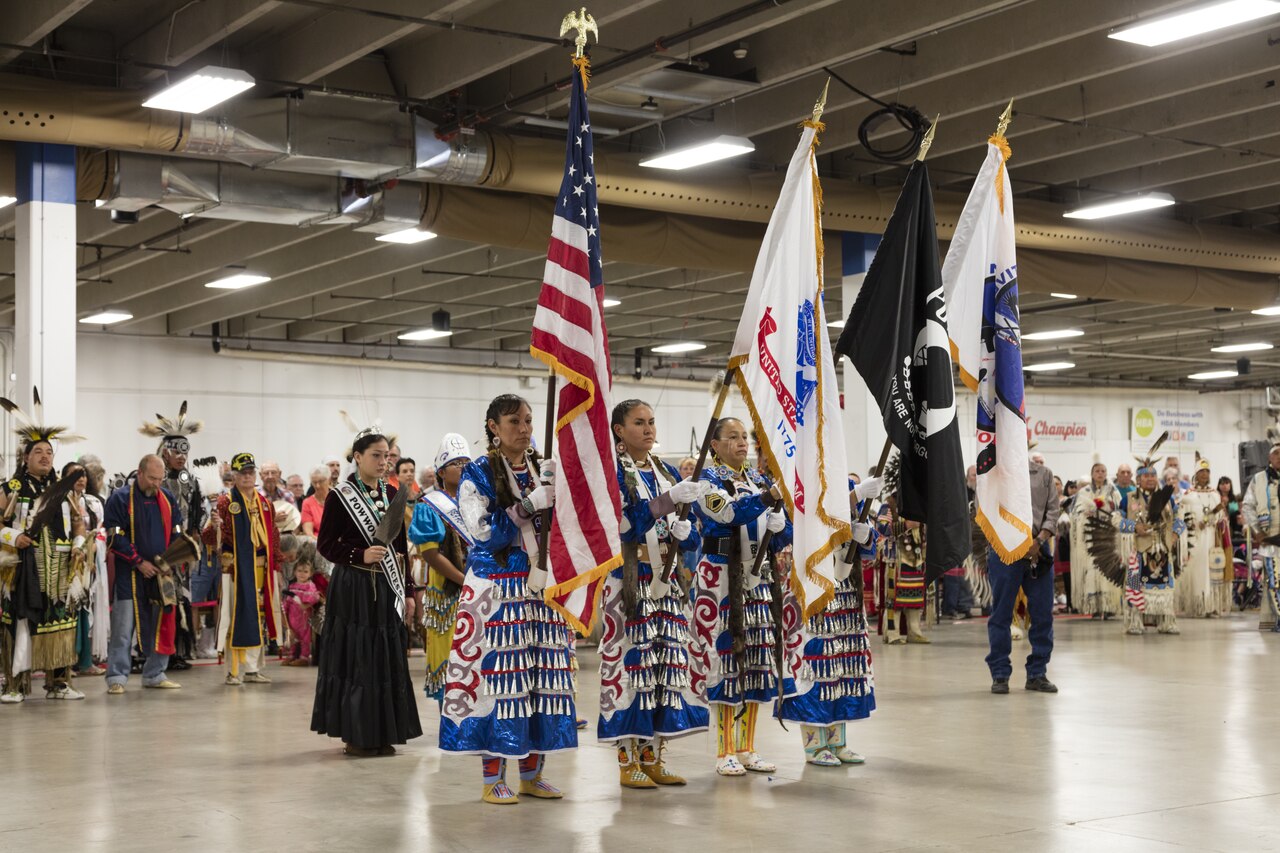
The Wounded Knee Massacre site in South Dakota has long held profound historical and spiritual significance for the Oglala Sioux Tribe and Cheyenne River Sioux Tribe. Currently, approximately 40 acres at the location—where federal troops killed hundreds of Lakota people on December 29, 1890—are not held in a status that grants the tribes full sovereign control and protection from state taxation and outside interference. The land's legal status creates uncertainty about tribal jurisdiction, potential state taxation, and the tribes' ability to manage the site according to their own governance and cultural practices without federal bureaucratic review. The Secretary of the Interior must complete all necessary actions within one year to transfer the 40-acre Wounded Knee site into restricted fee status held jointly by the Oglala Sioux Tribe and Cheyenne River Sioux Tribe. Under restricted fee status, the tribes will own the land outright, exercise full civil and criminal jurisdiction over it as part of the Pine Ridge Indian Reservation, and be exempt from state and local taxation. The Secretary must also resolve utility agreements and survey documentation. The land will be governed by a covenant between the two tribes dated October 21, 2022, and cannot be transferred without congressional and tribal consent. Gaming activities are prohibited under the Indian Gaming Regulatory Act. Once the Secretary completes the transfer process, the tribes gain permanent control over the sacred site and memorial. The change takes effect within one year of enactment, with no new federal funding required beyond Interior Department administrative costs. Existing utility easements and private agreements remain in place. The tribes can now develop and manage the site—including memorials, cultural programs, and educational facilities—according to their own priorities and tribal law, without state interference or federal approval for land use decisions. This establishes a model for tribal sovereignty over historically significant indigenous lands.
Native Americans
Latest updateDec 19, 2025
Became Public Law No: 119-61.
Native Americans
Armed Forces and National SecurityHR-109-119Latest action: Dec 19, 20252 readersIn Committee
TEAM Veteran Caregivers Act
Sponsored by Andy Biggs
The Department of Veterans Affairs currently administers two caregiver support programs under federal law: the Program of Comprehensive Assistance for Family Caregivers and the Program of Support Services for Caregivers. However, the department has faced criticism for inconsistent practices in recognizing caregivers, communicating eligibility decisions, and managing transitions when veterans lose clinical eligibility. Veterans and their caregivers often report receiving unclear or delayed notifications about why benefits were reduced or terminated, making it difficult to plan for alternative care arrangements or appeal decisions they believe are incorrect. The TEAM Veteran Caregivers Act requires the Secretary of Veterans Affairs to formally recognize all caregivers by documenting them in veterans' health records and to notify both veterans and caregivers using standardized letters whenever clinical determinations are made about eligibility, tier reductions, or program termination. These notifications must include the same explanatory elements required for other VA benefit decisions, ensuring recipients understand the reasoning behind the determination and their appeal rights. Additionally, the bill directs the VA to extend caregiver benefits for at least 90 days after notifying a veteran that they no longer qualify clinically, giving families time to arrange alternative care. The 90-day extension applies automatically upon ineligibility determination, except in cases of caregiver fraud, abuse, or neglect; when a replacement primary caregiver is designated; when a third family caregiver is added; when the caregiver moves out or abandons the relationship; or upon request by either party. The VA must implement these notification and recognition requirements using existing resources and processes. The temporary benefit extension creates a transition period that allows veterans and caregivers to adjust without immediate loss of support, though it does not permanently restore eligibility or create new funding streams beyond the 90-day window.
Armed Forces and National Security
Latest updateDec 19, 2025
Referred to the Subcommittee on Health.
Armed Forces and National Security
Public Lands and Natural ResourcesHR-186-119Latest action: Dec 9, 20250 readersPassed Chamber
Hershel Woody Williams National Medal of Honor Monument Location Act
Sponsored by Blake Moore
In 2021, Congress authorized the National Medal of Honor Museum Foundation to build a commemorative monument honoring Medal of Honor recipients on federal land in Washington, D.C. However, existing law—specifically section 8908(c) of title 40, United States Code, part of the Commemorative Works Act—restricts where such monuments can be placed. The law generally prohibits commemorative works from being located within the National Mall Reserve, a protected area that includes some of the nation's most prominent federal land near iconic monuments like the Lincoln Memorial. This restriction has prevented the Foundation from moving forward with a preferred location for the monument. This bill amends the Commemorative Works Act by authorizing an exception for the National Medal of Honor Monument. Specifically, it directs that the commemorative work authorized under the 2021 law shall be permitted to locate within the Reserve, notwithstanding the existing prohibition in section 8908(c). The bill maintains that all other provisions of the Commemorative Works Act—which govern design standards, construction timelines, maintenance responsibilities, and other regulatory requirements—continue to apply to the project. This targeted exception allows the National Medal of Honor Museum Foundation to proceed with establishing the monument in close proximity to the Lincoln Memorial. The bill takes effect immediately upon enactment, removing the legal barrier that previously blocked the Foundation's site selection. The Foundation remains responsible for securing funding through private donations and managing the design and construction process under the remaining Commemorative Works Act requirements. The monument's placement near the Lincoln Memorial creates a symbolic connection to President Abraham Lincoln, who established the Medal of Honor in 1863. No federal appropriations are required by this bill, and the change does not affect other commemorative works or National Mall regulations beyond this single project.
Public Lands and Natural Resources
Latest updateJan 21, 2025
Passed/agreed to in House: On motion to suspend the rules and pass the bill Agreed to by the Yeas and Nays: (2/3 required): 414 - 0 (Roll no. 18). (text: CR H237)

Public Lands and Natural Resources
ImmigrationHR-176-119Latest action: Dec 2, 20254 readersPassed Chamber
No Immigration Benefits for Hamas Terrorists Act of 2025
Sponsored by Tom McClintock
Under current immigration law, the Department of Homeland Security can deny entry to foreign nationals based on security grounds, including support for designated terrorist organizations. The Immigration and Nationality Act lists specific groups—including the Palestine Liberation Organization—whose members or representatives are inadmissible. However, existing law does not explicitly address individuals who participated in or supported the October 7, 2023 attacks on Israel, leaving ambiguity about whether such participation alone triggers automatic inadmissibility or bars relief from removal. This bill amends the Immigration and Nationality Act to establish explicit grounds for denying entry and immigration benefits to individuals connected to the October 7, 2023 attacks. The Department of Homeland Security must now treat as inadmissible any alien who carried out, participated in, planned, financed, provided material support to, or otherwise facilitated those attacks. The bill also renders such individuals ineligible for any relief under immigration law, including asylum, withholding of removal, and other protective statuses. Additionally, the bill adds Hamas and Palestinian Islamic Jihad to the list of organizations whose members are presumptively inadmissible. Implementation begins immediately upon enactment. The Department of Homeland Security must determine which individuals meet the criteria through existing vetting and investigative processes, with no new funding mechanism specified. Beginning one year after enactment, DHS must report annually to Congress on the number of aliens found inadmissible under this provision and those ordered removed. The change affects immigration proceedings already underway and future applications, potentially blocking asylum claims and other relief for individuals with alleged connections to the attacks, while creating a new category of deportable aliens.
Immigration
Latest updateDec 1, 2025
Passed/agreed to in House: On motion to suspend the rules and pass the bill, as amended Agreed to by voice vote. (text: CR H4926)
Immigration
Economics and Public FinanceHR-143-119Latest action: Dec 2, 20253 readersIn Committee
Unauthorized Spending Accountability Act
Sponsored by Kat Cammack
Congress regularly appropriates funds for federal programs even after their statutory authorizations expire. Currently, there is no automatic mechanism to reduce or eliminate funding for these unauthorized programs. Instead, they continue to receive appropriations year after year through the normal budget process, sometimes for decades after their original authorization lapsed. This creates a disconnect between congressional intent—expressed through time-limited authorizations—and actual spending, allowing programs to persist indefinitely without explicit reapproval. The Unauthorized Spending Accountability Act establishes an automatic three-year reduction schedule for any program whose authorization has expired. Beginning in fiscal year 2026, the House and Senate Budget Committees must reduce the budgetary allocation for unauthorized programs by 10 percent in the first year following expiration, then by 15 percent in the second and third years following expiration. The Congressional Budget Office's annual "Expired and Expiring Authorizations of Appropriations" report identifies which programs trigger these reductions. Congress can avoid these cuts by reauthorizing a program with a sunset provision limiting the authorization period to no more than three years. If an unauthorized program remains unfunded after three years of reductions, it terminates automatically on October 1 of the fourth year following expiration. Any unobligated funds may still be used to settle existing obligations, but no new spending is permitted without explicit congressional reauthorization. The reduction schedule applies to programs that expired before 2026 as well, treating them as if they expire in 2026 for purposes of the three-year cycle. This creates ongoing pressure on Congress to actively reauthorize programs rather than allowing them to continue on autopilot, fundamentally shifting the default from indefinite funding to time-limited authorization.
Economics and Public Finance
Latest updateDec 2, 2025
Ordered to be Reported (Amended) by the Yeas and Nays: 25 - 19.
Economics and Public Finance
Crime and Law EnforcementHR-4405-119Latest action: Nov 19, 20253 readersEnacted
Sponsored by Ro Khanna
Current federal law does not require the Department of Justice to publicly disclose documents and records related to Jeffrey Epstein investigations and prosecutions. The DOJ typically withholds such materials under various legal authorities, including privacy protections, national security classifications, and ongoing investigation concerns. Public access to these records has been limited, with some materials remaining sealed or classified years after key prosecutions and settlements concluded. The Epstein Files Transparency Act requires the Attorney General to release all unclassified DOJ records relating to Epstein, Ghislaine Maxwell, flight logs, named individuals connected to Epstein's activities, entities with ties to his networks, immunity agreements, internal DOJ communications about charging decisions, document destruction, and Epstein's detention and death. The Attorney General must make these materials publicly available in searchable and downloadable format within 30 days of enactment. The law explicitly prohibits withholding documents based on embarrassment, reputational harm, or political sensitivity to government officials or public figures. The Attorney General may still redact information to protect crime victims' privacy, child sexual abuse materials, active investigations or prosecutions, graphic images of death or injury, and properly classified national security information. However, all redactions require written justification published in the Federal Register and submitted to Congress. The law directs the Attorney General to declassify covered information to the maximum extent possible, and to release unclassified summaries of any information deemed too sensitive to declassify. Within 15 days of completing the release, the Attorney General must report to Congress on all categories of records released and withheld, summarize redactions made, and list all government officials and politically exposed persons named in released materials without redaction.
Crime and Law Enforcement
Latest updateNov 19, 2025
Became Public Law No: 119-38.
Crime and Law Enforcement
Public Lands and Natural ResourcesHR-197-119Latest action: Oct 27, 20253 readersPassed Chamber
Lake Winnibigoshish Land Exchange Act of 2025
Sponsored by Pete Stauber
The Chippewa National Forest in Minnesota currently consists of federally owned land managed by the U.S. Forest Service under the Department of Agriculture. Within this forest, the federal government holds approximately 17.5 acres in Itasca County that may be suitable for exchange with privately held land. Land exchanges within national forests are authorized under existing federal law but require specific congressional approval when substantial acreage or strategic interests are involved. This bill addresses a specific opportunity to reconfigure forest holdings in the region. The Secretary of Agriculture, acting through the Forest Service Chief, is authorized to exchange approximately 17.5 acres of federal land in the Chippewa National Forest for approximately 36.7 acres of non-federal land owned by Big Winnie Land and Timber, LLC (BWLT), a Minnesota company. The exchange must occur within one year of BWLT's offer and is conditioned on independent appraisals following federal standards, title approval, and completion of environmental site assessments. If the federal land is worth more than the private land, BWLT must pay the difference to the United States; if the private land is worth more, that excess value is waived as a donation. BWLT bears all costs including surveys, appraisals, environmental assessments, and closing expenses. Once completed, the non-federal land acquired by the United States will be added to and managed as part of the Chippewa National Forest under standard Forest Service rules and regulations. The Secretary must finalize detailed legal descriptions and maps within a reasonable timeframe, with these documents available for public inspection. The exchange preserves federal road access to National Forest System land west of the federal parcel through an easement. No federal appropriations are required, as BWLT funds all transaction costs. The net effect expands federal forest holdings by approximately 19.2 acres while reducing federal holdings by 17.5 acres in the same region.
Public Lands and Natural Resources
Latest updateJan 21, 2025
Passed/agreed to in House: On motion to suspend the rules and pass the bill Agreed to by voice vote. (text: CR H242-243)

Public Lands and Natural Resources
Crime and Law EnforcementHR-38-119Latest action: Oct 3, 20250 readersIn Committee
Constitutional Concealed Carry Reciprocity Act of 2025
Sponsored by Richard Hudson
Currently, federal law allows individual states to set their own rules for concealed carry permits. Some states issue permits to residents and recognize permits from other states; others issue permits only to residents; and a few states allow residents to carry concealed firearms without a permit. When someone travels across state lines with a concealed firearm, they must comply with the laws of each state they enter. This creates a patchwork of regulations where a person legally carrying a concealed handgun in their home state may violate another state's law simply by traveling there, even if they hold a valid permit from their home state. This bill amends Chapter 44 of Title 18, United States Code, by adding a new section establishing federal reciprocity for concealed carry. The bill requires that any person who is not prohibited by federal law from possessing firearms, who carries a valid photo identification document, and who holds a valid concealed carry license or permit from their home state—or is entitled to carry concealed in their home state without a permit—may carry a concealed handgun in any other state that either allows residents to apply for a concealed carry permit or does not prohibit concealed carry. The bill specifies that a person carrying under this reciprocity provision cannot be arrested or detained for violating state or local firearms laws unless there is probable cause to believe they are carrying in a manner not permitted by the bill. The bill takes effect 90 days after enactment. It preserves state and private property rights by allowing states to prohibit firearms on government property and allowing private property owners to restrict firearms on their land. The bill also shifts the burden of proof to prosecutors, requiring them to prove beyond reasonable doubt that a person's conduct violated the bill's conditions, and it allows defendants who successfully assert this protection to recover attorney's fees. Additionally, individuals can sue in federal court for damages if they are deprived of rights under this section, with prevailing plaintiffs recovering attorney's fees. The bill exempts reciprocity carriers from federal restrictions on firearms in schools and allows them to carry on certain federal lands including national parks, wildlife refuges, and Bureau of Land Management property.
Crime and Law Enforcement
Latest updateOct 3, 2025
Reported (Amended) by the Committee on Judiciary. H. Rept. 119-337.
Crime and Law Enforcement
Public Lands and Natural ResourcesHR-183-119Latest action: Jul 22, 20252 readersPassed Chamber
Law Enforcement Officer and Firefighter Recreation Pass Act
Sponsored by Tom McClintock
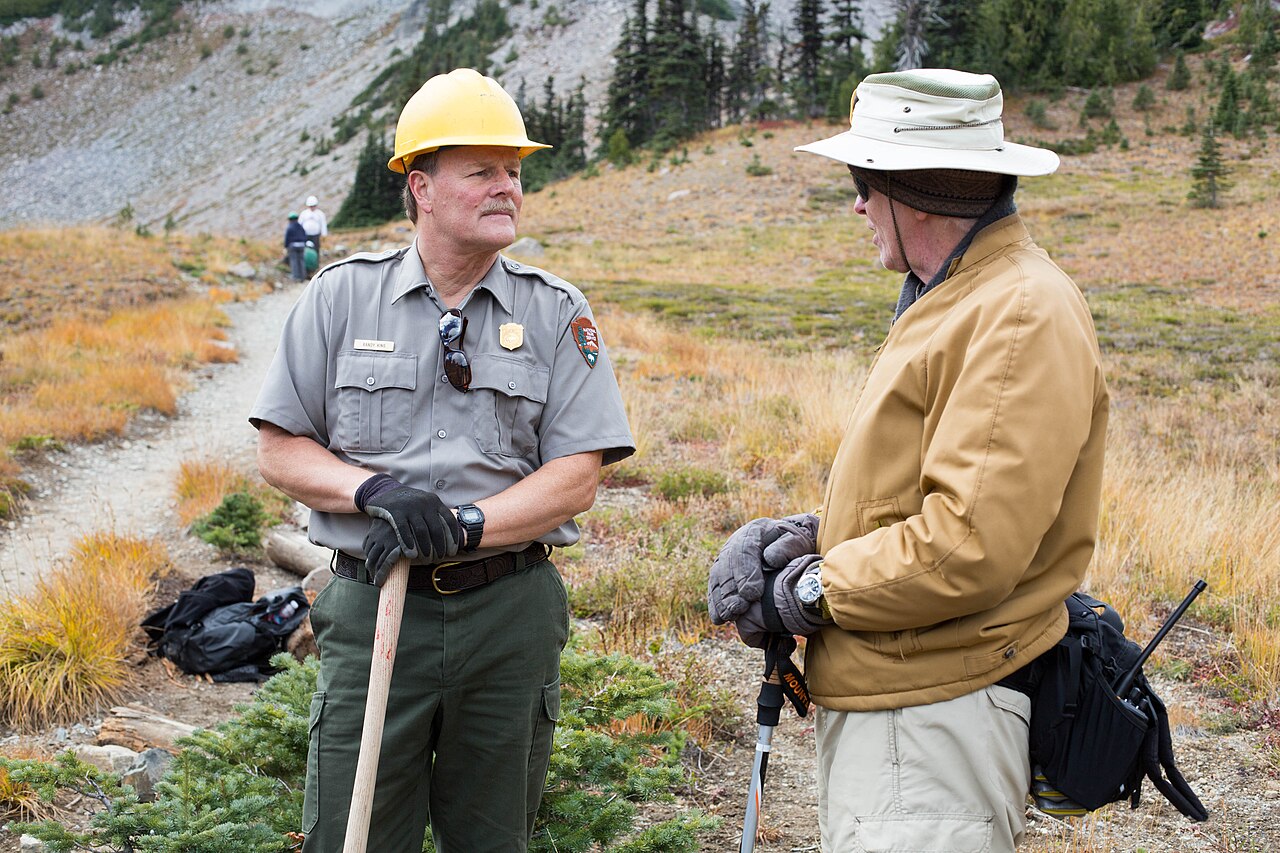
The Federal Lands Recreation Enhancement Act, enacted in 2004, established a system for managing recreation fees on federal lands managed by agencies like the National Park Service and U.S. Forest Service. Under current law, the National Parks and Federal Recreational Lands Pass—commonly known as the America the Beautiful Pass—costs $80 annually and provides unlimited access to over 2,000 federal recreation sites. The law already provides free passes to members of the Armed Forces and their dependents as a benefit for military service. However, law enforcement officers and firefighters, who face occupational hazards and serve the public, have not received similar fee-free access to these federal recreation areas. This bill amends Section 805(b) of the Federal Lands Recreation Enhancement Act to extend the free annual National Parks and Federal Recreational Lands Pass to law enforcement officers and firefighters. The Department of the Interior, through the National Park Service, will administer the program and determine what constitutes adequate proof of eligibility. The bill defines "law enforcement officer" to include any officer, agent, or employee of federal, state, local, or tribal governments authorized to prevent, detect, or investigate criminal violations or supervise offenders. "Firefighter" encompasses any employee of those same government entities who performs work directly related to suppressing fires, including wildland fires. Implementation will occur through existing pass distribution channels managed by the National Park Service and other federal land agencies. Eligible law enforcement officers and firefighters will need to provide proof of their employment status to receive the free pass, similar to the verification process for military members. The program requires no new appropriations, as it operates within existing recreation fee authority. The change will reduce annual revenue to federal land management agencies by the amount of passes issued to these groups, though the financial impact is expected to be modest given the relatively small population of eligible recipients compared to total pass sales.
Public Lands and Natural Resources
Latest updateJul 21, 2025
Passed/agreed to in House: On motion to suspend the rules and pass the bill, as amended Agreed to by voice vote. (text: CR H3496)
Public Lands and Natural Resources
Environmental ProtectionHR-180-119Latest action: Jul 22, 20251 readersIn Committee
Endangered Species Transparency and Reasonableness Act of 2025
Sponsored by Tom McClintock
The Endangered Species Act of 1973 currently requires the Department of the Interior and Department of Commerce to make listing decisions for endangered and threatened species based on the best scientific and commercial data available. However, the scientific basis for these determinations is not systematically published online, making it difficult for states, tribes, local governments, and the public to understand how species are classified. Additionally, federal expenditures on litigation related to the Endangered Species Act are not comprehensively tracked or disclosed, leaving gaps in public accountability for how resources are spent defending or implementing species protections. This bill requires the Department of the Interior, in consultation with the Department of Commerce, to publish online the scientific and commercial data underlying each species listing decision, subject to state privacy laws and Department of Defense security agreements. The bill also expands the definition of "best scientific and commercial data available" to explicitly include information submitted by state, tribal, and county governments. Additionally, the bill requires the Department of the Interior to submit annual reports to Congress and maintain a searchable public database detailing federal expenditures on Endangered Species Act litigation, including case details, agency costs, attorney fees, and employee time spent on covered suits across the Department of the Interior, Forest Service, Environmental Protection Agency, National Marine Fisheries Service, and power administrations. Implementation begins within 90 days of enactment for the first annual expenditure report, with the searchable database updated monthly thereafter. The bill uses existing agency budgets to fund these disclosure requirements. The changes affect how federal agencies document and justify species listings, potentially increasing state and tribal input into listing decisions and enabling public scrutiny of litigation spending. The disclosure of attorney fees and settlement details—even in sealed agreements—may influence settlement negotiations and litigation strategy, though the bill preserves confidentiality restrictions already in place within consent decrees.
Environmental Protection
Latest updateJul 16, 2025
Referred to the Subcommittee on Water, Wildlife and Fisheries.

Environmental Protection
Native AmericansHR-42-119Latest action: Jul 7, 20251 readersEnacted
Alaska Native Settlement Trust Eligibility Act
Sponsored by Nicholas Begich
Under current federal law, certain means-tested benefit programs—including Supplemental Security Income (SSI) for elderly, blind, and disabled individuals—count most forms of income and assets when determining eligibility and benefit amounts. The Alaska Native Claims Settlement Act of 1971 established Settlement Trusts that distribute payments to Alaska Native shareholders and their descendants. Historically, distributions from these trusts have been treated as countable income under SSI and related programs, reducing or eliminating benefits for recipients who receive trust payments, even when those payments are modest. This bill amends Section 29(c) of the Alaska Native Claims Settlement Act to exclude distributions and benefits from Settlement Trusts from being counted as income for purposes of determining eligibility for means-tested federal programs. Specifically, the amendment directs the Social Security Administration and other relevant federal agencies to disregard Settlement Trust distributions to Alaska Natives and descendants of Alaska Natives who are aged, blind, or disabled individuals—as defined under the Social Security Act—when calculating SSI eligibility and benefit levels. The exclusion applies for a five-year period beginning on the date the bill is enacted. In practice, Alaska Native beneficiaries who receive Settlement Trust distributions will retain their SSI eligibility and benefit amounts without reduction during the five-year window, allowing them to receive both trust payments and federal benefits simultaneously. The Social Security Administration will implement this change through updated income-counting rules in its SSI program regulations. After the five-year period expires, the exclusion terminates unless Congress extends it, and distributions will revert to being counted as income. The change carries no direct federal appropriation but may modestly increase SSI outlays by preventing benefit reductions for affected recipients during the implementation period.
Native Americans
Latest updateJul 7, 2025
Became Public Law No: 119-22.

Native Americans