Transportation and Public Works Desk
Transportation and Public Works Bills
6 bills in the Transportation and Public Works desk, ordered for current relevance and readability.
Transportation and Public WorksHR-188-119Latest action: Jun 6, 20255 readersIn Committee
Amtrak Transparency and Accountability for Passengers and Taxpayers Act
Sponsored by Troy Nehls
Currently, the National Railroad Passenger Corporation (Amtrak) is subject to the Freedom of Information Act under section 552 of title 5, United States Code, but is explicitly exempt from the Government in the Sunshine Act, which requires federal agencies and boards to hold open meetings. This means Amtrak's Board of Directors can conduct business behind closed doors without public notice, advance agendas, or meeting minutes—unlike most other federally funded entities. Amtrak receives substantial taxpayer funding annually, yet operates with less transparency than many private corporations and government agencies. This bill amends section 24301(e) of title 49, United States Code, to require Amtrak's Board of Directors to comply with the open meetings requirements of section 552b of title 5. The change directs Amtrak to provide advance notice of meetings, open sessions to the public, maintain detailed minutes, and disclose voting records—the same obligations that apply to other federal agencies. However, the bill preserves narrow exemptions allowing Amtrak to close portions of meetings involving contract negotiations, collective bargaining discussions, personnel matters, and confidential commercial information, provided the company determines such disclosure would harm its competitive position or employee privacy. Amtrak must implement these requirements immediately upon enactment. The bill does not provide new funding; compliance relies on existing Amtrak resources. In practice, the Board will need to restructure meeting procedures, establish public notice systems, and train staff on disclosure obligations. The change creates enforceable transparency without eliminating legitimate business confidentiality. Passengers, taxpayers, and Congress gain visibility into Board decisions affecting service routes, fares, and capital spending, while Amtrak retains protections for sensitive negotiations and personnel information comparable to those available to other federal entities.
Transportation and Public Works
Latest updateJun 6, 2025
Reported (Amended) by the Committee on Transportation and Infrastructure. H. Rept. 119-144.

Transportation and Public Works
Transportation and Public WorksHR-192-119Latest action: Jan 14, 20252 readersPassed Chamber
Amtrak Executive Bonus Disclosure Act
Sponsored by David Rouzer
Amtrak, the federally chartered passenger railroad, currently submits annual financial and operational reports to Congress as required by title 49 of the United States Code. These reports detail the railroad's finances, performance metrics, and organizational structure. However, existing law does not require Amtrak to publicly disclose detailed compensation information for its executive leadership, including base salaries and bonus payments. This lack of transparency means that taxpayers who fund Amtrak's operations have limited visibility into how executive compensation is structured or what performance criteria trigger bonus awards. This bill amends section 24315(a) of title 49 to require Amtrak to disclose executive compensation in two ways. First, the National Railroad Passenger Corporation (Amtrak) must include annual base pay and bonus compensation information for members of its executive leadership team—defined as the chief executive officer, president, and officers—in its annual reports submitted to Congress. Second, Amtrak must make this same compensation information publicly available on its website. The bill also requires Amtrak to disclose the specific criteria and metrics used to determine any bonus compensation awarded to these executives. Amtrak must incorporate these disclosure requirements into its existing annual reporting process, with no separate funding authorization specified in the legislation. The changes take effect upon enactment and apply to all future annual reports. By posting executive compensation details online alongside its congressional filings, Amtrak will provide real-time public access to information previously available only through congressional channels. This increased transparency may influence how Amtrak structures executive incentive programs and could prompt congressional or public scrutiny of compensation practices at the federally supported railroad.
Transportation and Public Works
Latest updateJan 13, 2025
Passed/agreed to in House: On motion to suspend the rules and pass the bill Agreed to by the Yeas and Nays: (2/3 required): 407 - 0 (Roll no. 8). (text: CR H99)
Transportation and Public Works
Transportation and Public WorksHR-213-119Latest action: Jan 7, 20250 readersIn Committee
To prohibit the use of Federal financial assistance for a certain high-speed rail development project in the State of California, and for other purposes.
Sponsored by Kevin Kiley
The Federal Railroad Administration (FRA) has provided financial assistance to California through a cooperative agreement (FR-HSR-0118-12-01-01) to support development of a high-speed rail corridor. This project has received federal funding over multiple years as part of broader federal investment in rail infrastructure. Currently, the FRA may continue to provide federal financial assistance to California for this high-speed rail project under existing law, subject to standard federal grant and cooperative agreement procedures. This bill prohibits the Federal Railroad Administration from providing any federal financial assistance to California for the high-speed rail corridor development project covered by the existing cooperative agreement or any project substantially similar to it. The prohibition applies to all forms of federal financial assistance, effectively blocking the FRA from awarding new grants, loans, or other federal funds to support this specific rail corridor or closely related versions of it. The bill does not specify an implementation timeline or require the FRA to recover previously awarded funds. The prohibition takes effect upon enactment and applies prospectively to any future federal financial assistance decisions. Existing federal funds already disbursed under the cooperative agreement would not be affected by this bill. The change would prevent the FRA from approving new funding requests or continuing financial support for this project, potentially halting or delaying construction phases that depend on federal resources. Other high-speed rail projects in California or elsewhere would not be affected by this narrow prohibition.
Transportation and Public Works
Latest updateJan 7, 2025
Referred to the Subcommittee on Railroads, Pipelines, and Hazardous Materials.

Transportation and Public Works
Transportation and Public WorksHR-203-119Latest action: Jan 4, 20250 readersIn Committee
Red Light Act
Sponsored by Claudia Tenney
Currently, all states receive federal highway funding through apportionment formulas established in title 23 of the United States Code. These funds support road construction, maintenance, and transportation infrastructure projects nationwide. Some states have enacted laws allowing them to issue driver's licenses or identification cards to individuals who are unlawfully present in the United States, a practice that has become increasingly common in recent years as a way to improve public safety and facilitate access to services. The Red Light Act directs the Secretary of Transportation to withhold 100 percent of federal highway funds apportioned to any state that has enacted a law permitting the issuance of driver's licenses or identification cards to aliens unlawfully present in the United States. The withholding applies to funds under sections 104(b)(1), 104(b)(3), and 104(b)(4) of title 23, which cover surface transportation block grants and other core highway funding. The mechanism is straightforward: states with such laws lose their federal highway allocation entirely for that fiscal year, beginning in fiscal year 2023. Withheld funds remain available through the end of the fiscal year in which they are withheld. If a state repeals all laws allowing such identification cards before the fiscal year ends, the Secretary must immediately reapportion the withheld funds to that state. If a state does not repeal the law by year's end, the withheld funds are redistributed proportionally among states that do not have such laws. States that regain funding by repealing the law but later re-enact such a law face withholding again in the following fiscal year and each year thereafter. This creates an ongoing compliance mechanism tied to state identification card policies.
Transportation and Public Works
Latest updateJan 4, 2025
Referred to the Subcommittee on Highways and Transit.
Transportation and Public Works
Transportation and Public WorksHR-141-119Latest action: Jan 4, 20250 readersIn Committee
Trailer Safety Improvement Act
Sponsored by Tim Burchett
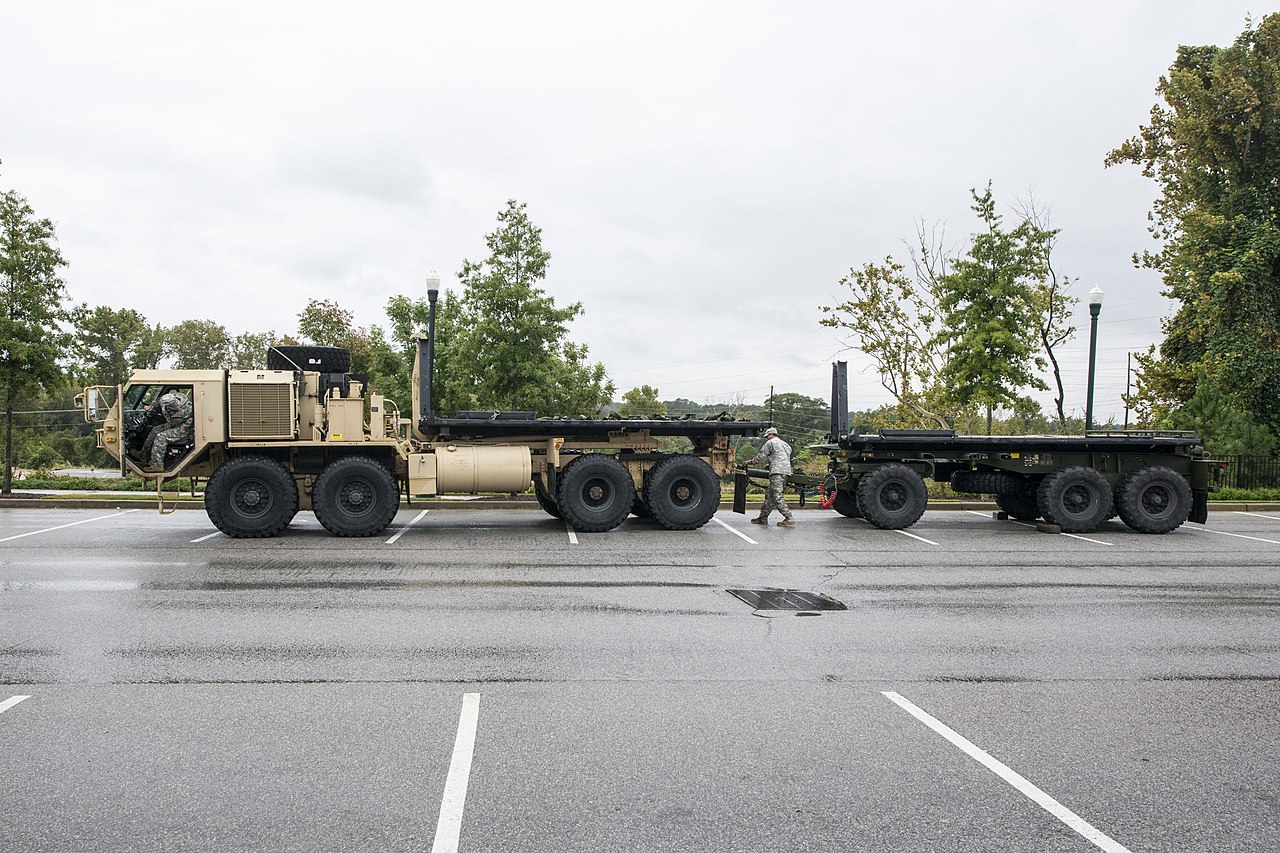
Under current federal law, the Department of Transportation establishes highway safety program requirements that states must follow to receive federal highway safety grants. Title 23 of the United States Code specifies eligible activities for state highway safety programs, including education on vehicle safety topics like unsecured loads. However, trailer safety—covering proper use of light-duty and medium-duty trailers, required safety equipment, and maintenance—is not explicitly listed as a required or eligible focus area for state programs, leaving gaps in public education about trailer-related hazards. The Trailer Safety Improvement Act amends Section 402(a)(2)(A)(xiv) of Title 23 to require the Department of Transportation to include trailer safety education within state highway safety programs. Specifically, the amendment directs states to address prevention of improper and unsafe trailer use, educate the public about required trailer safety equipment, and promote preventive maintenance practices. This change expands the scope of federally supported highway safety activities to explicitly encompass trailers alongside existing vehicle safety topics. States receiving federal highway safety grants will incorporate trailer safety education into their existing programs, using current funding mechanisms and grant structures. The change takes effect upon enactment and does not require new appropriations—states will integrate trailer safety into their existing curricula and outreach efforts. This expansion aligns state safety programs with emerging concerns about trailer-related accidents and equipment failures, potentially reducing incidents involving improperly maintained or operated trailers on public roads.
Transportation and Public Works
Latest updateJan 4, 2025
Referred to the Subcommittee on Highways and Transit.
Transportation and Public Works
Transportation and Public WorksHR-81-119Latest action: Jan 4, 20250 readersIn Committee
Travel Mask Mandate Repeal Act of 2025
Sponsored by Andy Biggs
During the COVID-19 pandemic, the Centers for Disease Control and Prevention (CDC) issued a mask mandate in January 2021 requiring individuals to wear face masks on airplanes, trains, buses, and other public conveyances, as well as in transportation hubs like airports and train stations. This mandate was issued under the CDC's authority under the Public Health Service Act to implement disease control measures. The Transportation Security Administration (TSA) issued related directives enforcing compliance. These requirements remained in effect for an extended period, though the CDC eventually allowed the mandate to expire in 2022. The mandate represented one of the most visible federal health requirements during the pandemic. The Travel Mask Mandate Repeal Act of 2025 prohibits the CDC, the TSA, and all other federal agencies from imposing any federal requirement that individuals wear masks on conveyances or at transportation hubs related to COVID-19. The bill explicitly voids the CDC's January 29, 2021 mask mandate order and all related TSA directives and amendments that implemented or enforced mask requirements on public transportation. The legislation operates as a blanket prohibition, preventing any federal agency from reinstating similar mask mandates in the future without explicit congressional authorization. The bill takes effect immediately upon enactment. Because the CDC's original mask mandate has already expired and is no longer in force, the practical effect is primarily prospective—it prevents federal agencies from reimposing mask requirements on transportation without new legislation. The bill does not affect state or local mask mandates, which remain within the authority of individual states and municipalities. Private transportation companies retain the ability to establish their own mask policies independent of federal requirements. The legislation has no direct budgetary impact and does not alter funding for public health agencies or transportation systems.
Transportation and Public Works
Latest updateJan 4, 2025
Referred to the Subcommittee on Highways and Transit.
Transportation and Public Works