Congress Desk
Congress Bills
41 bills in the Congress desk, ordered for current relevance and readability.
CongressSCONRES-2-119Latest action: Jan 3, 20255 readersAgreed to in Both Chambers
A concurrent resolution to provide for the counting on January 6, 2025, of the electoral votes for President and Vice President of the United States.
Sponsored by John Thune
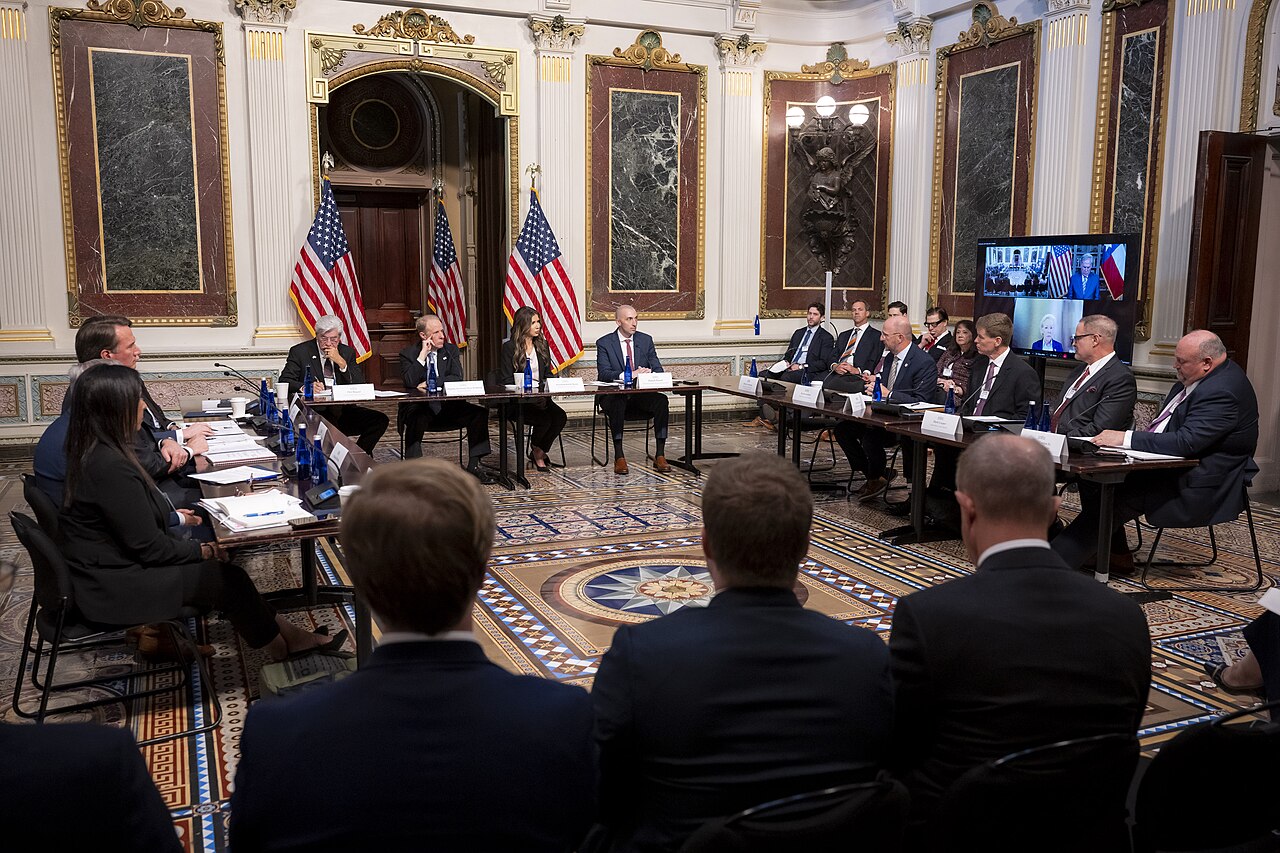
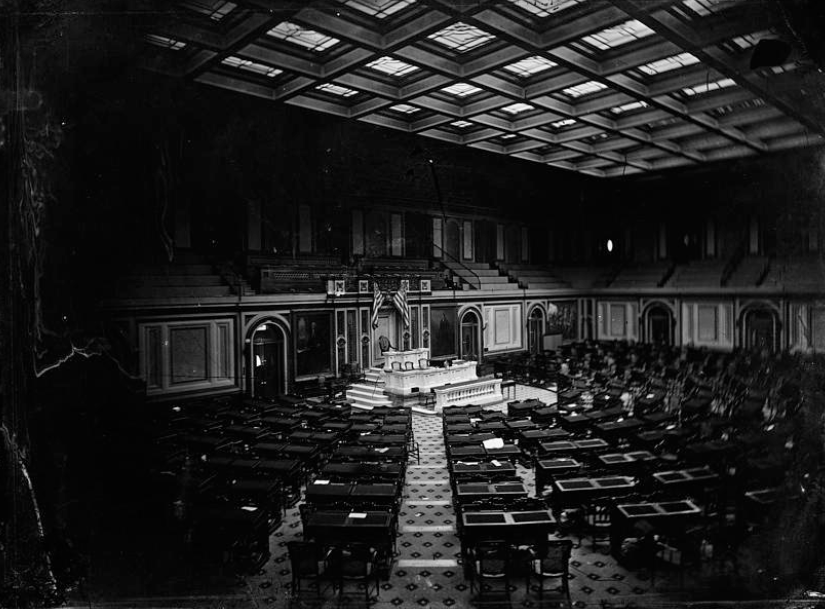
The Constitution requires Congress to meet in joint session to count electoral votes cast by states in presidential elections. Federal law, primarily the Electoral Count Act of 1887 and subsequent amendments, establishes the procedures for this counting process, including how objections to electoral votes are handled and the role of the President of the Senate in presiding. This concurrent resolution serves as the formal mechanism by which Congress schedules and authorizes the joint session needed to fulfill this constitutional duty. This concurrent resolution directs both the Senate and House of Representatives to convene in joint session in the Hall of the House of Representatives on January 6, 2025, at 1 p.m. The President of the Senate shall preside over the proceedings. The resolution requires the President of the Senate to appoint two tellers from the Senate and the Speaker to appoint two tellers from the House to receive and read aloud all electoral certificates as they are opened. The tellers must present and act upon these certificates in alphabetical order by state, then compile a list of votes according to procedures established by existing law. Once the tellers complete their count, they deliver the results to the President of the Senate, who announces the outcome. This announcement constitutes the official declaration of which candidates, if any, have been elected President and Vice President. The vote tally and list of electoral votes are then entered into the official journals of both chambers. The entire process follows the rules and procedures already codified in federal election law, with this resolution simply establishing the date, time, and location for Congress to execute its constitutional obligation to count and certify the electoral votes.
Congress
Latest updateJan 3, 2025
Passed/agreed to in House: On agreeing to the resolution Agreed to without objection.
Congress
CongressSCONRES-1-119Latest action: Jan 3, 20252 readersAgreed to in Both Chambers
A concurrent resolution extending the life of the Joint Congressional Committee on Inaugural Ceremonies.
Sponsored by John Thune
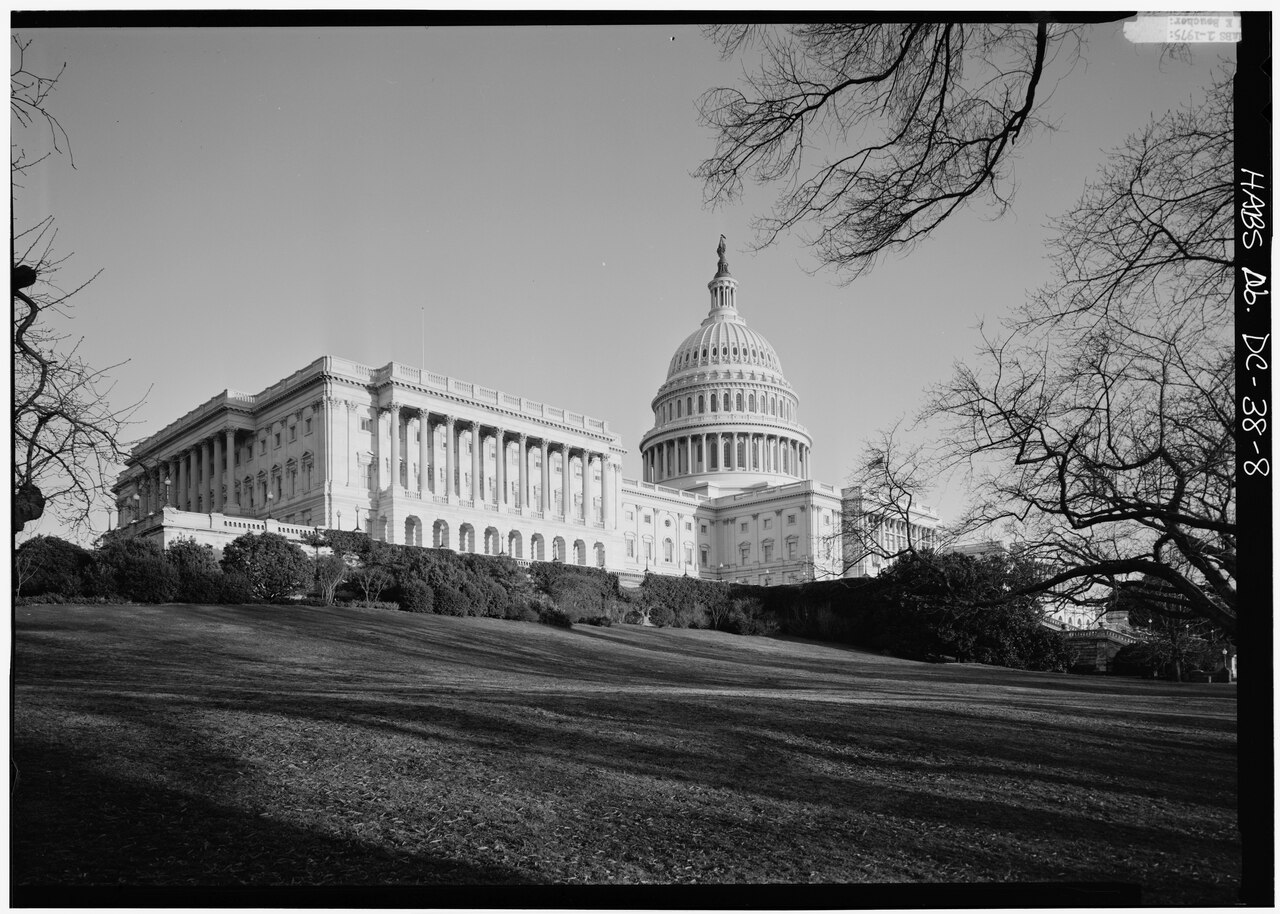
The Joint Congressional Committee on Inaugural Ceremonies is a temporary body created by Congress to oversee the logistical and ceremonial arrangements for presidential inaugurations. This committee operates under authority granted through Senate Concurrent Resolutions and typically expires after each inauguration concludes. The committee coordinates with Capitol Police, the Secret Service, and other federal agencies to manage security, seating, processions, and the overall execution of the inauguration ceremony on the Capitol steps and surrounding grounds. This concurrent resolution reauthorizes the Joint Congressional Committee on Inaugural Ceremonies, extending its authority beyond the previous authorization that expired after the 2024 inauguration. The resolution continues the committee with the same powers and responsibilities established under Senate Concurrent Resolution 34 of the 118th Congress, allowing it to make necessary arrangements for the 2025 presidential inauguration. Additionally, the resolution reauthorizes the committee's use of Capitol facilities, including the rotunda and Emancipation Hall, as specified in Senate Concurrent Resolution 35 of the 118th Congress, ensuring the committee can conduct inaugural proceedings and ceremonies in these spaces. The reauthorization takes effect immediately on January 3, 2025, the date Congress convenes for the new session. No new funding is required, as the committee operates under existing appropriations and relies on coordination with established federal agencies already responsible for inaugural security and logistics. The resolution has no sunset date specified, meaning the committee's authority continues through the completion of the 2025 inauguration ceremonies. This reauthorization is routine and occurs before each presidential inauguration to ensure Congress has formally delegated the necessary authority to coordinate what is constitutionally one of the government's most significant ceremonial events.
Congress
Latest updateJan 3, 2025
Passed/agreed to in House: On agreeing to the resolution Agreed to without objection.
Congress
CongressHRES-6-119Latest action: Jan 3, 20250 readersAdopted
Fixing the daily hour of meeting of the First Session of the One Hundred Nineteenth Congress.
Sponsored by Michelle Fischbach
The House of Representatives traditionally operates under standing rules that establish when daily sessions begin each week. These rules have evolved over decades and currently set varying start times depending on the day of the week. The specific hours for convening have been adjusted periodically to accommodate members' schedules, committee work, and the volume of legislative business anticipated. The current framework allows flexibility through special orders but establishes baseline meeting times that govern routine operations unless the chamber votes to change them for a particular day. This resolution directs the House to adopt a fixed daily meeting schedule for the 119th Congress's first session. The new schedule establishes 2 p.m. starts on Mondays; noon on Tuesdays (or 2 p.m. if no legislative business occurred the previous Monday); noon on Wednesdays and Thursdays; and 9 a.m. on all other weekdays. The resolution applies unless the House votes to order otherwise on a specific day, preserving the chamber's ability to adjust timing when needed. This standardized approach replaces the previous framework and takes effect immediately upon adoption. The schedule becomes operative for all legislative sessions during the first session of the 119th Congress unless the House passes a separate motion to convene at a different time. No additional funding is required, as the change affects only the timing of existing operations. The earlier 9 a.m. start on most days may increase the number of legislative hours available for floor debate and voting, while the later Monday start accommodates members traveling to Washington. The schedule's consistency reduces uncertainty for members planning their weekly activities and may affect committee meeting schedules, which typically occur outside floor session hours.
Congress
Latest updateJan 3, 2025
Passed/agreed to in House: On agreeing to the resolution Agreed to without objection. (text: CR H23)
Congress
CongressHRES-5-119Latest action: Jan 3, 20252 readersAdopted
Adopting the Rules of the House of Representatives for the One Hundred Nineteenth Congress, and for other purposes.
Sponsored by Michelle Fischbach
The House of Representatives operates under standing rules that govern floor procedures, committee operations, and member conduct. These rules carry over from one Congress to the next unless explicitly changed. At the start of each new Congress, the House formally adopts its rules for the coming two-year term. The current rules framework includes provisions on how bills are numbered, how committees function, how members interact with leadership, and what procedural safeguards exist around spending and budget matters. This resolution adopts the House rules from the previous Congress for the 119th Congress while making targeted amendments. The Speaker and House leadership direct changes to several procedural mechanisms: requiring eight majority-party cosponsors to remove the Speaker from office (up from current practice), permitting electronic voting in committees, renaming the Committee on Oversight and Accountability back to the Committee on Oversight and Government Reform, eliminating the Office of Diversity and Inclusion, and restricting motions to suspend House rules to Mondays through Wednesdays. The resolution also codifies long-standing practices around Article V constitutional amendment memorials, reserves the first 20 bill numbers for leadership assignment, and clarifies procedures during designated district work periods when members return home. These changes take effect immediately upon adoption of the resolution. The procedural modifications affect how the House conducts daily business—committees gain flexibility with electronic voting, the Speaker gains procedural protection through the higher threshold for removal, and the legislative calendar becomes more structured around district work periods. The elimination of the Office of Diversity and Inclusion removes that administrative function from the House payroll. The budget-related provisions establish new scoring rules for federal land conveyances and require the Congressional Budget Office to analyze long-term spending impacts and inflationary effects of certain legislation, changing how committees evaluate bills before floor consideration.
Congress
Latest updateJan 3, 2025
Passed/agreed to in House: On agreeing to the resolution Agreed to by the Yeas and Nays: 215 - 209 (Roll no. 5). (text: CR H8-14)
Congress
CongressHRES-4-119Latest action: Jan 3, 20252 readersAdopted
Authorizing the Clerk to inform the President of the election of the Speaker and the Clerk.
Sponsored by Harold Rogers
The House of Representatives must formally notify the President when it has elected its leadership. Historically, this notification has occurred through established congressional procedures, but the House periodically passes resolutions to explicitly authorize and direct the Clerk to carry out this constitutional duty. The Speaker and Clerk are two of the most senior positions in the legislative branch, with the Speaker serving as the chamber's presiding officer and chief representative, while the Clerk maintains official records and administers House operations. Formal notification to the executive branch ensures the President is officially informed of the House's leadership structure at the start of a new Congress. This resolution directs the Clerk of the House of Representatives to inform the President that the House has elected Mike Johnson, a Representative from Louisiana, as Speaker and Kevin McCumber, a citizen of Illinois, as Clerk of the House for the 119th Congress. The resolution is a procedural measure that formalizes the Clerk's authority to communicate these election results to the President. By passing this resolution, the House creates an explicit mandate for the Clerk to deliver official notification, ensuring the executive branch receives timely and authoritative confirmation of the chamber's elected leadership. The Clerk will execute this notification immediately following passage of the resolution, as the 119th Congress convened on January 3, 2025. No additional funding is required, as this represents a routine administrative function of the House Clerk's office. The notification has no direct downstream effects on existing programs or markets, but it formally establishes the leadership structure under which the House will operate for the two-year congressional term. This procedural step is necessary for the President to recognize the Speaker as the official representative of the House in all executive-legislative communications and ceremonial functions.
Congress
Latest updateJan 3, 2025
Passed/agreed to in House: On agreeing to the resolution Agreed to without objection. (text: CR H8)
Congress
CongressHRES-3-119Latest action: Jan 3, 20253 readersAdopted
Authorizing the Speaker to appoint a committee to notify the President of the assembly of the Congress.
Sponsored by Steve Scalise
At the start of each new Congress, the President must be formally notified that both chambers have assembled and are prepared to receive any presidential communication. Historically, this notification has been handled through an established protocol involving committees from both the House and Senate. The current practice relies on informal coordination between the chambers and relies on the Speaker's authority to designate House members for this ceremonial duty. However, explicit authorization through a resolution ensures clarity about the process and confirms that a quorum—the minimum number of members required for official business—has been achieved in each chamber before formal proceedings commence. This resolution authorizes the Speaker of the House to appoint a committee of two House members to join with a corresponding Senate committee to notify the President that Congress has assembled with a quorum and stands ready to receive any communication he wishes to deliver. The Speaker exercises this appointment power at the beginning of a new Congress, typically on the opening day. The two-member House committee will coordinate with the Senate's parallel committee to deliver the notification to the President, fulfilling a constitutional courtesy that signals the legislative branch is organized and operational. The notification occurs immediately following the opening of a new Congress, generally within the first day of the legislative session. No additional funding is required, as this represents a routine ceremonial function performed by existing congressional staff and members. The process has minimal downstream effects on other programs or operations; it serves primarily as a formal acknowledgment that both chambers have met their quorum requirements and are prepared to conduct legislative business. This resolution is typically adopted on the opening day of each new Congress as part of standard organizational procedures.
Congress
Latest updateJan 3, 2025
Passed/agreed to in House: On agreeing to the resolution Agreed to without objection. (text: CR H8)
Congress
CongressHRES-2-119Latest action: Jan 3, 20252 readersAdopted
To inform the Senate that a quorum of the House has assembled and of the election of the Speaker and the Clerk.
Sponsored by Steve Scalise
At the start of each new Congress, the House of Representatives must formally notify the Senate that it has achieved a quorum—the minimum number of members needed to conduct official business—and must report the election of its two top officers: the Speaker and the Clerk. These notifications are procedural requirements that allow the two chambers to coordinate and begin legislative work. Historically, this formal communication has been delivered through a simple resolution, a non-binding measure that serves as an official record of these organizational actions rather than as substantive legislation. H. Res. 2 directs the House to inform the Senate that a quorum of Representatives has assembled for the 119th Congress. The resolution formally announces that Mike Johnson, a Representative from Louisiana, has been elected Speaker of the House, and that Kevin McCumber, a citizen of Illinois, has been elected Clerk. These two positions are essential to House operations: the Speaker presides over floor proceedings and serves as the chamber's chief officer, while the Clerk maintains official records, manages administrative functions, and oversees the legislative process. The resolution serves as the official record of these elections. Once adopted, this resolution is transmitted to the Senate, enabling that chamber to recognize the House as properly organized and ready to conduct business. The measure has no direct budgetary impact and creates no new programs or regulatory requirements. It is a ceremonial but necessary step in the constitutional process of organizing a new Congress, typically passed on the opening day of the legislative session. The resolution allows both chambers to proceed with their respective organizational activities and to begin coordinating on legislative matters.
Congress
Latest updateJan 3, 2025
Passed/agreed to in House: On agreeing to the resolution Agreed to without objection. (text: CR H8)
Congress
CongressHRES-1-119Latest action: Jan 3, 20250 readersAdopted
Electing officers of the House of Representatives.
Sponsored by Lisa McClain
The House of Representatives must elect its officers at the beginning of each new Congress. These positions — Clerk, Sergeant-at-Arms, and Chief Administrative Officer — are essential to the chamber's daily operations. The Clerk maintains legislative records, manages the chamber's administrative functions, and oversees voting procedures. The Sergeant-at-Arms enforces House rules and maintains security. The Chief Administrative Officer manages the House's budget, human resources, and facilities. These officers serve at the pleasure of the House and are elected through formal resolution at the start of each congressional session. This resolution elects three individuals to serve as House officers for the 119th Congress. The House designates Kevin McCumber of Illinois as Clerk of the House of Representatives, William McFarland of Maryland as Sergeant-at-Arms of the House of Representatives, and Catherine Szpindor of Virginia as Chief Administrative Officer of the House of Representatives. These elections occur through separate resolutions, each naming the individual and their state of residence, and take effect immediately upon passage. These officers assume their duties immediately following the resolution's adoption on January 3, 2025, the opening day of the 119th Congress. They serve two-year terms corresponding to the congressional session. The Clerk, Sergeant-at-Arms, and Chief Administrative Officer oversee hundreds of House staff members and manage budgets totaling hundreds of millions of dollars annually. Their election establishes the leadership structure through which the House conducts legislative business, manages its facilities, and maintains its records for the next two years.
Congress
Latest updateJan 3, 2025
Passed/agreed to in House: On agreeing to the resolution Agreed to by voice vote. (text: CR H7-8)
Congress
CongressHR-95-119Latest action: Jan 3, 20253 readersIn Committee
One Bill, One Subject Transparency Act
Sponsored by Andy Biggs
Congress currently operates under no federal requirement that bills address only a single subject. While many state constitutions include "single-subject" rules to prevent legislators from bundling unrelated provisions into omnibus bills, the U.S. Congress has no comparable restriction. This allows lawmakers to combine disparate policy areas—such as defense spending, tax changes, and healthcare reforms—into a single legislative package. Critics argue this practice obscures individual provisions from public scrutiny and prevents targeted debate on specific issues. The One Bill, One Subject Transparency Act requires that each bill or joint resolution enacted by Congress address only one subject, with that subject clearly and descriptively stated in the bill's title. The legislation applies this requirement to appropriations bills as well, prohibiting general legislation or changes to existing law unless they are germane to the bill's stated subject matter. The bill establishes that violations trigger automatic voidness: if a bill's title addresses multiple unrelated subjects, the entire act becomes void; if provisions concern subjects not expressed in the title, those provisions alone become void; and if appropriations bills contain provisions outside relevant subcommittee jurisdiction or not germane to the bill's subject, those provisions become void. Enforcement occurs through federal courts under the Declaratory Judgment Act. Any person, including Members of Congress, may sue the United States seeking an injunction against enforcement of laws that violate the one-subject requirement. Courts apply a de novo standard of review, meaning they examine the question independently without deference to prior decisions. The bill takes effect upon enactment and applies only to bills signed into law after that date. This creates immediate uncertainty about how courts will interpret "subject," "germane," and "unrelated," potentially leading to litigation over existing and future legislation and disrupting the enforcement of laws found to violate the requirement.
Congress
Latest updateJan 3, 2025
Referred to the House Committee on the Judiciary.
Congress
CongressHRES-12-119Latest action: Jan 3, 20253 readersIn Committee
Stay on Schedule (S.O.S.) Resolution
Sponsored by Robert Wittman
The House of Representatives typically adopts a recess schedule each year that includes an August break, allowing members to return to their districts. This recess is formalized through a concurrent resolution that the House considers and approves. Currently, there are no procedural rules preventing the House from taking an August recess regardless of whether the twelve regular appropriation bills for the upcoming fiscal year have been passed. These appropriation bills fund federal agencies and programs and must be approved before the new fiscal year begins on October 1. The lack of a deadline mechanism has historically allowed the House to adjourn for August even when appropriations work remains incomplete. This resolution amends Rule XXI of the House Rules to prohibit the House from considering a concurrent resolution to recess during August unless all twelve regular appropriation bills for the next fiscal year have already passed. The rule defines "regular appropriation bills" as the annual appropriation measures under the jurisdiction of individual subcommittees of the House Committee on Appropriations. The prohibition applies only to recesses occurring after July 31, meaning the House cannot formally adjourn for August if any of the twelve bills remain unpassed. The rule does not prevent individual members from being absent; it blocks the formal adoption of an August recess resolution. The rule takes effect immediately upon adoption and requires no funding. In practice, the House would need to complete action on all twelve appropriation bills by July 31 to proceed with a scheduled August recess. If bills remain pending, the House must either pass them before adjourning or delay its August break. This creates a procedural incentive to complete appropriations work earlier in the legislative calendar. The rule does not change the substance of appropriations bills or grant new authority to any agency; it operates solely as an internal House scheduling mechanism designed to align the legislative calendar with fiscal deadlines.
Congress
Latest updateJan 3, 2025
Submitted in House
Congress
CongressHJRES-7-119Latest action: Jan 3, 20252 readersIn Committee
Proposing an amendment to the Constitution of the United States to prohibit Members of Congress from receiving compensation during a fiscal year unless both Houses of Congress have agreed to a concurrent resolution on the budget for that fiscal year prior to the beginning of that fiscal year.
Sponsored by Brian Fitzpatrick
Congress currently operates without a constitutional requirement to adopt a budget before the fiscal year begins. Members receive their salaries regardless of whether the House and Senate have agreed on a concurrent budget resolution—a nonbinding blueprint that outlines spending priorities and revenue estimates. In practice, budget resolutions are often delayed or not completed until months into the fiscal year, or sometimes not adopted at all. This disconnect means Congress can function and pay its members even when no formal agreement exists on the government's overall fiscal direction, which some argue removes incentive to complete budgeting work on schedule. This joint resolution proposes a constitutional amendment that would prohibit Members of Congress from receiving compensation during any fiscal year unless both the House and Senate have agreed to an identical concurrent resolution on the budget before that fiscal year begins. The amendment would apply only to fiscal years beginning after the amendment is ratified by three-fourths of state legislatures. The mechanism is straightforward: no budget agreement by October 1 means no paychecks for representatives and senators until one is reached. This creates a direct financial consequence tied to completing the budget resolution process, theoretically incentivizing timely action. If ratified, the amendment would take effect for the first fiscal year beginning after state ratification is complete. There is no funding mechanism because the provision operates through withholding existing compensation rather than appropriating new money. The downstream effect would be substantial: members would face immediate personal financial pressure to reach budget agreement before each fiscal year starts. This could accelerate negotiations and reduce delays in the budget resolution process, though it might also create pressure to adopt resolutions hastily without adequate deliberation. The amendment requires no action by federal agencies—it is self-executing once ratified.
Congress
Latest updateJan 3, 2025
Referred to the House Committee on the Judiciary.
Congress
CongressHR-157-119Latest action: Jan 3, 20252 readersIn Committee
CLEAN Congress Act
Sponsored by Brian Fitzpatrick
Congress currently operates under rules that allow multiple unrelated subjects to be bundled into a single bill or joint resolution sent to the President. This practice, known as "omnibus" or "logrolling," enables lawmakers to attach provisions on disparate topics—such as defense spending, environmental regulations, and tax policy—into one legislative package. Additionally, federal law contains numerous provisions that exempt Members of Congress and their staff from requirements that apply to other Americans, including workplace safety rules, labor standards, and certain financial disclosure obligations. These exemptions have accumulated over decades through various statutes. The CLEAN Congress Act prohibits Congress from presenting any bill, joint resolution, or other measure to the President that addresses more than one subject. The legislation requires that each bill embrace a single, clearly identifiable subject and that the title of the measure accurately describe that subject. Simultaneously, the bill eliminates all federal law provisions that grant exceptions to Members of Congress or congressional staff from laws applicable to the general public. The measure carves out a narrow exception: it does not eliminate rules permitting Members and employees to perform official duties tied directly to lawmaking, such as accessing the Capitol building and congressional facilities. The prohibition on multi-subject bills takes effect immediately for the 119th Congress and all subsequent Congresses, meaning any measure presented to the President must satisfy the single-subject requirement or face potential constitutional challenge. The bill contains no new funding mechanism, as it operates through legislative procedure rather than appropriations. The elimination of congressional exemptions from federal law takes effect upon enactment, though the narrow carve-out for official duties preserves access and operational necessities. The practical effect would reshape how Congress structures legislation, potentially requiring separate votes on distinct policy areas and subjecting Members to the same legal obligations as other federal employees and citizens.
Congress
Latest updateJan 3, 2025
Referred to the House Committee on the Judiciary.
Congress