Bills Desk
Latest Bills
252 bills from the 119th Congress, led by the newest arrivals from Capitol Hill.
Transportation and Public WorksHR-192-119Latest action: Jan 14, 20252 readersPassed Chamber
Amtrak Executive Bonus Disclosure Act
Sponsored by David Rouzer
Amtrak, the federally chartered passenger railroad, currently submits annual financial and operational reports to Congress as required by title 49 of the United States Code. These reports detail the railroad's finances, performance metrics, and organizational structure. However, existing law does not require Amtrak to publicly disclose detailed compensation information for its executive leadership, including base salaries and bonus payments. This lack of transparency means that taxpayers who fund Amtrak's operations have limited visibility into how executive compensation is structured or what performance criteria trigger bonus awards. This bill amends section 24315(a) of title 49 to require Amtrak to disclose executive compensation in two ways. First, the National Railroad Passenger Corporation (Amtrak) must include annual base pay and bonus compensation information for members of its executive leadership team—defined as the chief executive officer, president, and officers—in its annual reports submitted to Congress. Second, Amtrak must make this same compensation information publicly available on its website. The bill also requires Amtrak to disclose the specific criteria and metrics used to determine any bonus compensation awarded to these executives. Amtrak must incorporate these disclosure requirements into its existing annual reporting process, with no separate funding authorization specified in the legislation. The changes take effect upon enactment and apply to all future annual reports. By posting executive compensation details online alongside its congressional filings, Amtrak will provide real-time public access to information previously available only through congressional channels. This increased transparency may influence how Amtrak structures executive incentive programs and could prompt congressional or public scrutiny of compensation practices at the federally supported railroad.
Transportation and Public Works
Latest updateJan 13, 2025
Passed/agreed to in House: On motion to suspend the rules and pass the bill Agreed to by the Yeas and Nays: (2/3 required): 407 - 0 (Roll no. 8). (text: CR H99)

Transportation and Public Works
Government Operations and PoliticsHR-189-119Latest action: Jan 14, 20252 readersPassed Chamber
Securities and Exchange Commission Real Estate Leasing Authority Revocation Act
Sponsored by Eleanor Norton
The Securities and Exchange Commission currently holds independent authority to lease office space directly from private landlords under federal law, rather than going through the General Services Administration, which typically handles real estate leasing for federal agencies. This independent leasing power allows the SEC to negotiate and execute its own lease agreements without centralized government oversight of those transactions. The SEC has used this authority to secure office space in multiple locations to support its regulatory operations. This bill amends title 40 of the United States Code to revoke the SEC's independent leasing authority. The General Services Administration Administrator will assume responsibility for leasing all general-purpose office space on behalf of the SEC, effective immediately upon enactment. The SEC will no longer be permitted to enter into new lease agreements directly with private parties; instead, the GSA will handle all such negotiations and contracts under its standard leasing procedures and authority. Existing SEC leases signed before the bill's enactment remain valid and unaffected. The bill also directs the Comptroller General of the United States to conduct a comprehensive review of other federal agencies that retain independent leasing authorities, updating a 2016 Government Accountability Office report. This review will identify which agencies still hold such powers, how much space they lease, whether they have voluntarily used GSA services, and progress on prior recommendations to consolidate leasing authority. The Comptroller General must report findings to relevant congressional committees within a specified timeframe, with no dedicated funding mechanism specified in the legislation.
Government Operations and Politics
Latest updateJan 13, 2025
Passed/agreed to in House: On motion to suspend the rules and pass the bill Agreed to by voice vote. (text: CR H104)
Government Operations and Politics
Emergency ManagementHR-152-119Latest action: Jan 14, 20252 readersPassed Chamber
Federal Disaster Assistance Coordination Act
Sponsored by Mike Ezell
When disasters strike, multiple federal agencies collect information from affected individuals and businesses seeking assistance, often asking for overlapping or redundant details. Similarly, preliminary damage assessments—the initial evaluations that determine disaster aid eligibility—are conducted separately by different agencies, creating fragmentation and duplication. The Disaster Recovery Reform Act of 2018 established a framework for federal disaster response, but it did not address the inefficiencies in how information is gathered or how damage is assessed across agencies. These duplicative processes burden applicants, delay aid distribution, and waste government resources. The Federal Disaster Assistance Coordination Act directs the Federal Emergency Management Agency (FEMA) Administrator, working with the Small Business Administration, Department of Housing and Urban Development, Department of Labor, Office of Management and Budget, Department of Health and Human Services, Department of Transportation, and other relevant agencies, to conduct a comprehensive study within two years. FEMA must develop a plan to streamline and consolidate information collection from disaster applicants and grantees, reducing duplication and administrative burden. The Administrator must also establish a working group to identify overlaps in preliminary damage assessments, evaluate whether a single federal agency could conduct all assessments, and explore emerging technologies like unmanned aircraft systems to speed up the assessment process. FEMA must submit a comprehensive report to Congress within two years containing the streamlining plans and working group findings, along with any recommendations. The report will be made publicly available on FEMA's website in downloadable and machine-readable formats. Within 180 days after submitting the report, FEMA and the Council of the Inspectors General on Integrity and Efficiency must brief congressional committees on the findings. The study itself does not mandate immediate changes to disaster assistance processes; rather, it creates a roadmap for potential future reforms that Congress and FEMA can use to improve efficiency in federal disaster response.
Emergency Management
Latest updateJan 13, 2025
Passed/agreed to in House: On motion to suspend the rules and pass the bill Agreed to by the Yeas and Nays: (2/3 required): 405 - 5 (Roll no. 9). (text: CR H100-101)
Emergency Management
EducationHR-233-119Latest action: Jan 7, 20257 readersIn Committee
HELP PETS Act
Sponsored by Nicole Malliotakis
Currently, federal funding for higher education institutions operates under broad eligibility rules that do not restrict grants, loans, or other federal support based on the types of animal research conducted on campus. While the Department of Agriculture regulates animal research through the Animal Welfare Act and classifies research by pain level, institutions can still receive federal education funding even if they conduct painful experiments on dogs and cats. This creates a situation where taxpayer dollars support higher education at institutions engaged in research that many Americans find ethically troubling. The HELP PETS Act prohibits the Department of Education from making federal funds available to any institution of higher education that conducts or funds painful research on dogs or cats, effective 180 days after enactment. The bill defines "painful research" as any biomedical training, experimentation, or biological testing classified in pain categories D or E by the Department of Agriculture. The law carves out exceptions for clinical veterinary research conducted to benefit the individual animal and for research involving service animals or military animals, which remain eligible for federal funding. Implementation begins six months after the bill becomes law, giving institutions time to cease painful dog and cat research or face loss of all federal education funding. The Department of Education will need to establish procedures for institutions to certify compliance and for the agency to verify that no painful research on these animals occurs. Institutions conducting such research would lose access to federal student aid, research grants, and other education funding streams, creating strong financial incentives to redirect research protocols or discontinue painful studies on dogs and cats while preserving federally funded work on other species and clinical veterinary care.
Education
Latest updateJan 7, 2025
Referred to the House Committee on Education and Workforce.
Education
HealthHR-237-119Latest action: Jan 7, 20254 readersIn Committee
Paws Off Act of 2025
Sponsored by David Schweikert
Under the Federal Food, Drug, and Cosmetic Act, the Food and Drug Administration (FDA) regulates food labeling to protect public health. Currently, foods containing xylitol—a sugar substitute commonly used in sugar-free gum, candy, baked goods, and peanut butter—are not required to carry warnings about the ingredient's effects on animals. Xylitol is toxic to dogs and can cause serious health problems including liver damage and hypoglycemia when ingested, yet consumers may be unaware of this risk when purchasing products for their homes. The Paws Off Act of 2025 amends the Federal Food, Drug, and Cosmetic Act to require the FDA to deem any food containing xylitol as misbranded if it lacks a warning label specifying xylitol's toxic effects on dogs. The Secretary of Health and Human Services, acting through the FDA Commissioner, must issue an interim final rule within six months of enactment and a final rule within one year. The warning requirement applies to all foods containing xylitol sold in the United States, establishing a uniform labeling standard across the food industry. Manufacturers will need to update product labels and packaging to include the required warning before the final rule takes effect. The FDA will enforce compliance through its existing authority to remove misbranded foods from commerce. Food companies have a one-year transition period to reformulate labels or face enforcement action. The change affects the sugar-free food market, particularly manufacturers of gum, candy, and spreads, but imposes no direct federal spending since the FDA uses existing resources to implement and enforce the rule.
Health
Latest updateJan 7, 2025
Referred to the House Committee on Energy and Commerce.

Health
CongressHRES-20-119Latest action: Jan 7, 20250 readersIn Committee
Establishing the Select Committee on Electoral Reform.
Sponsored by Marie Perez
Congress currently operates under two major structural constraints established decades ago. The Uniform Congressional District Act of 1967 requires every state to elect House members exclusively from single-member districts—meaning each district sends one representative to Washington. The Permanent Apportionment Act of 1929 fixed the House at 435 members permanently, ending the historical practice of adding seats after each census as the nation's population grew. These rules shape how Americans vote and who gets elected, yet they remain largely unexamined in light of modern electoral alternatives that other democracies and some U.S. states have adopted. This resolution establishes a Select Committee on Electoral Reform within the House of Representatives, composed of 14 members appointed by the Speaker and minority leader in equal numbers. The committee will examine current congressional election methods and evaluate alternatives—including multi-member districts with proportional representation, ranked-choice voting, open primaries, and independent redistricting commissions. The committee will conduct hearings with political scientists, current and former members of Congress, state and local officials who have implemented these reforms, and international officials from countries using alternative systems. The committee will also identify federal legal barriers to state experimentation with different electoral systems. The Select Committee must hold its first meeting within 30 days of full membership and issue a final report to Congress and the President within one year, including recommendations it deems appropriate. The committee will operate under standard House committee rules but cannot take legislative action or pass bills—it functions as an investigative and advisory body only. Funding comes through interim House appropriations and existing House staff resources. After filing its final report, the committee automatically terminates 30 days later. The committee's work will not directly change election law but will provide Congress with analysis and recommendations for potential future electoral reforms.
Congress
Latest updateJan 7, 2025
Submitted in House
Congress
Government Operations and PoliticsHR-221-119Latest action: Jan 7, 20250 readersIn Committee
Abolish the ATF Act
Sponsored by Eric Burlison
The Bureau of Alcohol, Tobacco, Firearms and Explosives (ATF) currently operates as a federal law enforcement agency within the Department of Justice, enforcing federal laws related to firearms, explosives, and alcohol and tobacco trafficking. Established in 1972, the ATF investigates violations of federal firearms statutes, regulates the firearms and explosives industries, and works with state and local law enforcement on criminal investigations. The agency maintains a licensing system for firearms dealers, manufacturers, and importers, and oversees compliance with federal explosives regulations. It also collects excise taxes on firearms and ammunition. This bill abolishes the Bureau of Alcohol, Tobacco, Firearms and Explosives entirely, eliminating the agency and its authority to enforce federal firearms, explosives, and alcohol and tobacco laws. The bill contains no provisions transferring ATF functions to other agencies, establishing replacement mechanisms, or specifying how existing regulatory responsibilities would be handled. No timeline for wind-down operations is specified, nor are there instructions regarding the disposition of ongoing investigations, licensing systems, or regulatory oversight currently managed by the agency. The practical effects of abolishment would be immediate cessation of ATF operations, though the bill does not address how federal firearms licensing, explosives regulation, or law enforcement coordination would continue. Existing federal firearms statutes would remain on the books but lack an enforcement mechanism. State and local law enforcement agencies would inherit responsibility for investigating federal firearms crimes without federal coordination infrastructure. The federal excise tax collection system for firearms and ammunition would require restructuring or elimination. Congressional appropriations currently directed to the ATF would need reallocation or elimination.
Government Operations and Politics
Latest updateJan 7, 2025
Referred to the House Committee on the Judiciary.
Government Operations and Politics
Transportation and Public WorksHR-213-119Latest action: Jan 7, 20250 readersIn Committee
To prohibit the use of Federal financial assistance for a certain high-speed rail development project in the State of California, and for other purposes.
Sponsored by Kevin Kiley
The Federal Railroad Administration (FRA) has provided financial assistance to California through a cooperative agreement (FR-HSR-0118-12-01-01) to support development of a high-speed rail corridor. This project has received federal funding over multiple years as part of broader federal investment in rail infrastructure. Currently, the FRA may continue to provide federal financial assistance to California for this high-speed rail project under existing law, subject to standard federal grant and cooperative agreement procedures. This bill prohibits the Federal Railroad Administration from providing any federal financial assistance to California for the high-speed rail corridor development project covered by the existing cooperative agreement or any project substantially similar to it. The prohibition applies to all forms of federal financial assistance, effectively blocking the FRA from awarding new grants, loans, or other federal funds to support this specific rail corridor or closely related versions of it. The bill does not specify an implementation timeline or require the FRA to recover previously awarded funds. The prohibition takes effect upon enactment and applies prospectively to any future federal financial assistance decisions. Existing federal funds already disbursed under the cooperative agreement would not be affected by this bill. The change would prevent the FRA from approving new funding requests or continuing financial support for this project, potentially halting or delaying construction phases that depend on federal resources. Other high-speed rail projects in California or elsewhere would not be affected by this narrow prohibition.
Transportation and Public Works
Latest updateJan 7, 2025
Referred to the Subcommittee on Railroads, Pipelines, and Hazardous Materials.
Transportation and Public Works
CongressHRES-14-119Latest action: Jan 6, 20250 readersAdopted
Electing Members to certain standing committees of the House of Representatives.
Sponsored by Pete Aguilar
House standing committees are the primary forums where members deliberate on legislation, conduct oversight of federal agencies, and shape policy in their respective domains. Each committee typically has a chair who sets the agenda, schedules hearings, and directs staff. Committee assignments and leadership positions are determined through internal House procedures, often reflecting party composition and seniority. The House regularly adopts resolutions to formalize these assignments and ensure committees have the members needed to conduct business. This resolution elects 17 named members to serve as the ranking members or senior representatives of their respective standing committees. The House adopts this resolution to formally designate these individuals to their committee positions across major policy areas—including agriculture, appropriations, armed services, budget, education, energy, financial services, foreign affairs, homeland security, judiciary, natural resources, oversight, science, small business, transportation, veterans affairs, and ways and means. Each named member assumes a leadership or senior role within their assigned committee. The resolution takes effect immediately upon adoption. These committee assignments carry no direct federal spending; they are internal House organizational matters. The designated members gain authority to participate in committee deliberations, introduce amendments, and influence the legislative agenda within their assigned committees. These assignments typically reflect the minority party's representation in the House, allowing the designated members to serve as ranking members who lead their party's efforts on committee business and direct minority staff resources.
Congress
Latest updateJan 6, 2025
Passed/agreed to in House: On agreeing to the resolution Agreed to without objection. (text: CR H49)
Congress
CongressHRES-13-119Latest action: Jan 6, 20250 readersAdopted
Electing Members to certain standing committees of the House of Representatives.
Sponsored by Lisa McClain
The House of Representatives operates through standing committees that handle legislation in specific policy areas—agriculture, defense, healthcare, and others. These committees are chaired by senior members who set agendas, schedule hearings, and direct staff. Committee leadership positions are typically allocated to the majority party following each new Congress. The selection of committee chairs is a formal procedural matter that requires a House resolution to officially elect members to these leadership roles and establish the committee structure for the legislative session.
Congress
Latest updateJan 6, 2025
Passed/agreed to in House: On agreeing to the resolution Agreed to without objection. (text: CR H48)
Congress
CongressHR-212-119Latest action: Jan 6, 20250 readersIn Committee
Capitol Remembrance Act
Sponsored by Jason Crow
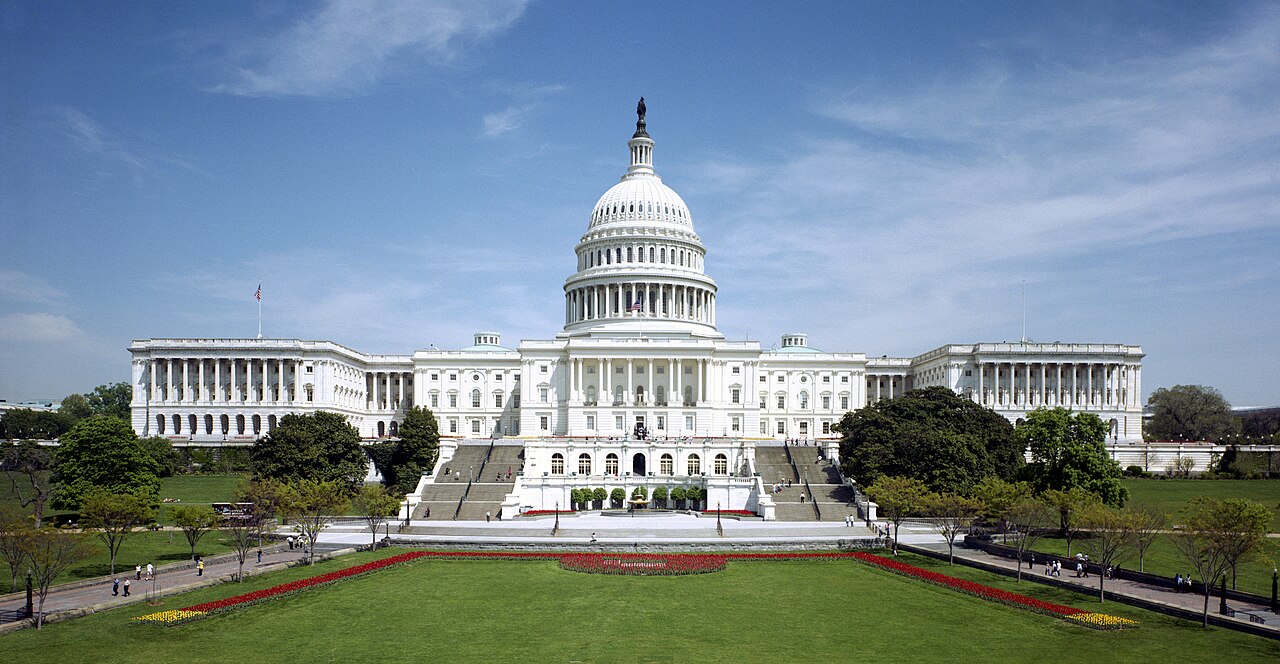
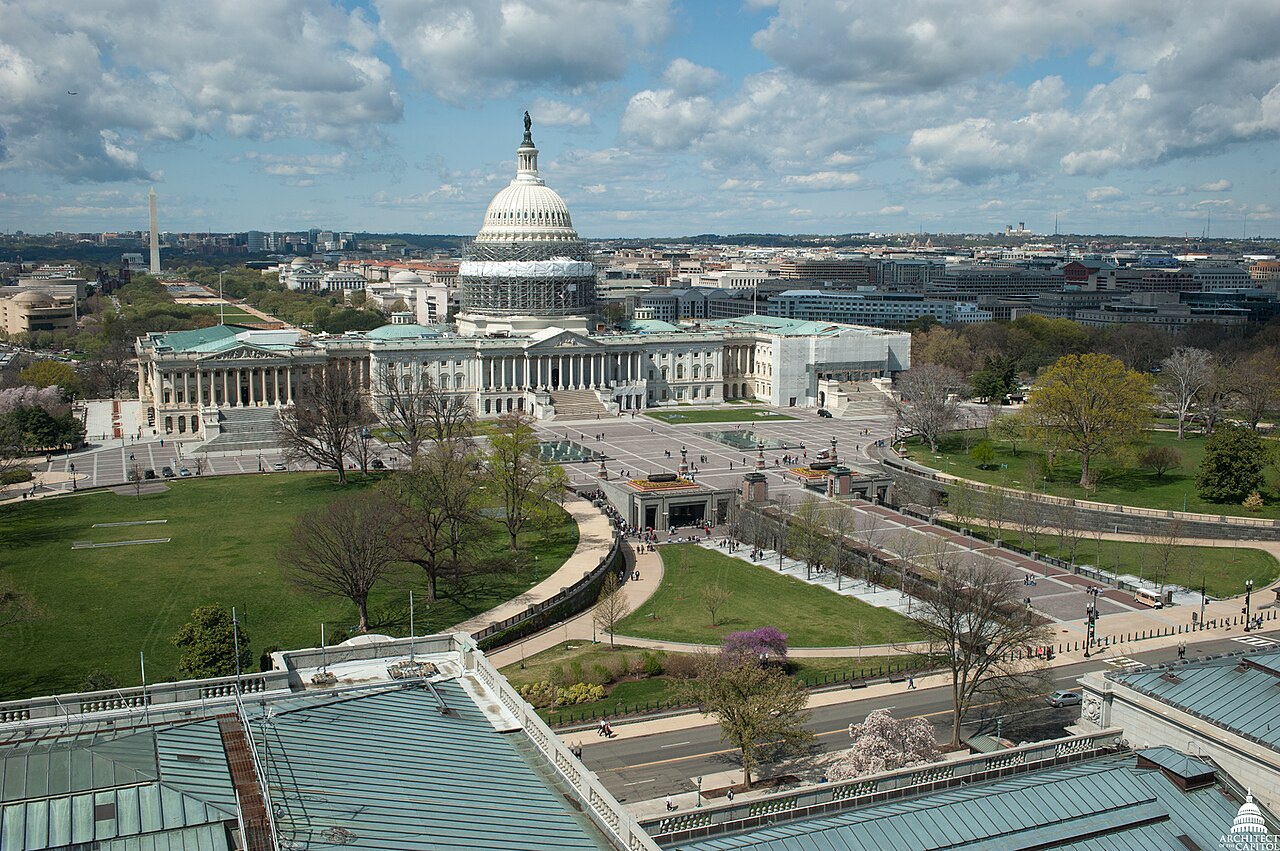
The United States Capitol has no permanent exhibit commemorating the January 6, 2021 attack. While the Capitol has undergone repairs and restoration since that day, there is currently no dedicated space within the building that documents the event, honors those who were injured or died protecting the building, or educates visitors about what occurred. The Capitol serves as a symbol of American democracy and receives hundreds of thousands of visitors annually, yet lacks a formal mechanism to preserve the historical record of this significant attack on the institution. The Capitol Remembrance Act directs the Architect of the Capitol, in consultation with the Joint Committee on the Library, to design and install a permanent exhibit in a prominent location within the United States Capitol depicting the January 6, 2021 attack. The exhibit must include damaged Capitol property preserved from the attack, existing photographic records, and a plaque honoring the United States Capitol Police, other law enforcement agencies, and Capitol staff involved in the response and restoration. The Architect may also incorporate artwork created to depict the attack. The project must be completed within two years of the bill's enactment. The Architect of the Capitol will oversee the exhibit's design and installation, selecting the location and determining which damaged property to preserve and display. Congress has authorized whatever funding is necessary to complete the project, with appropriated amounts remaining available until spent. The exhibit will become a permanent fixture in the Capitol, serving as both a historical record and a memorial. This will affect how visitors experience the Capitol and understand its recent history, while also creating an ongoing institutional acknowledgment of the event and those affected by it.
Congress
Latest updateJan 6, 2025
Referred to the House Committee on House Administration.
Congress
Government Operations and PoliticsHR-214-119Latest action: Jan 6, 20250 readersIn Committee
District of Columbia Legislative Home Rule Act
Sponsored by Eleanor Norton
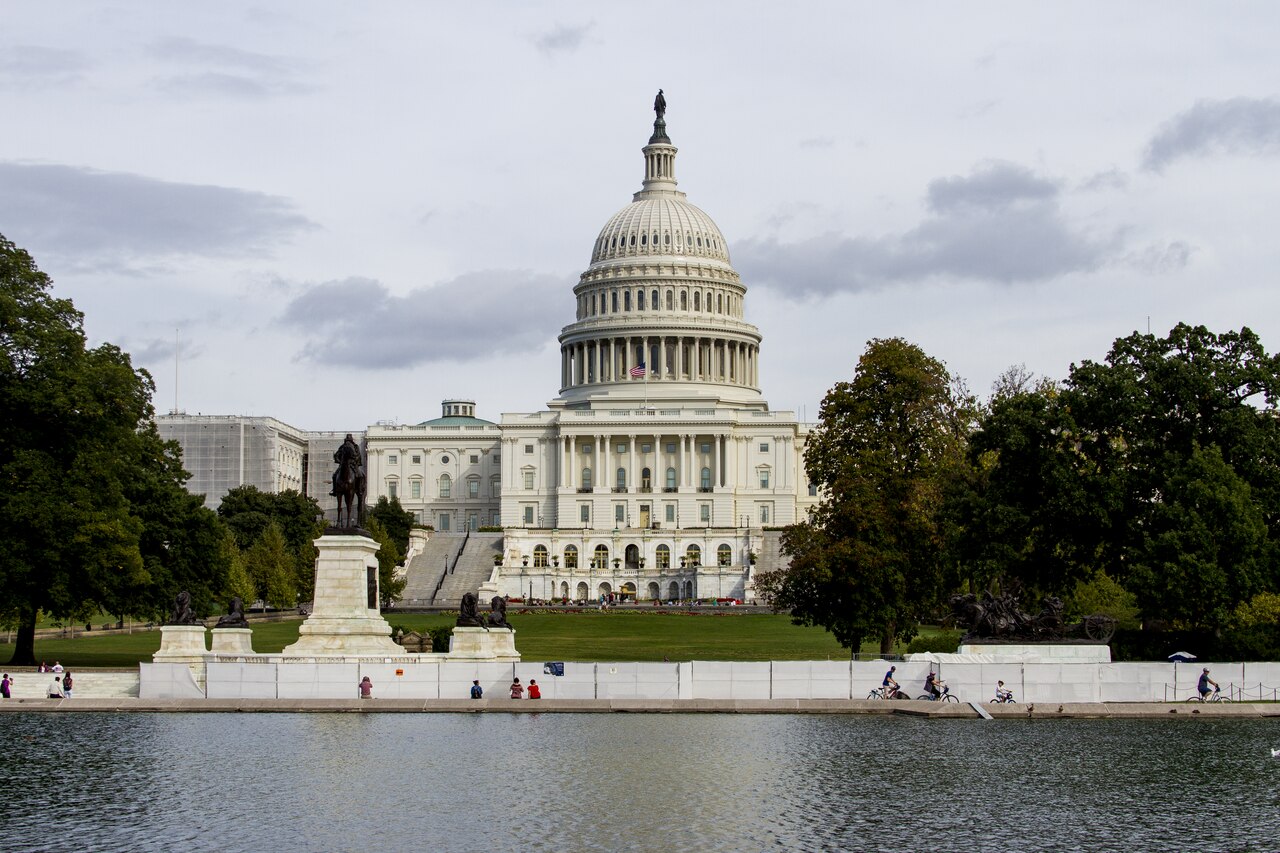
Under the District of Columbia Home Rule Act of 1973, the District's locally elected government has limited autonomy. While the D.C. Council can pass legislation and the Mayor can sign it into law, Congress retains a 30-day review period during which either chamber can block D.C. laws through a resolution of disapproval. This congressional veto power applies to all local legislation, from budget matters to criminal justice reforms. The review period effectively gives Congress a final say over D.C.'s internal affairs, even though D.C. residents have no voting representation in Congress. This bill eliminates that congressional review mechanism entirely. It repeals Section 604 of the Home Rule Act, which established the process for congressional resolutions of disapproval, and strikes Section 602(c), which imposed the 30-day waiting period. The bill also removes related provisions that required D.C. officials to transmit acts to Congress and track their progress through the review process. Once these amendments take effect, D.C. laws will become effective immediately upon the Mayor's signature or Council passage without any congressional intervention or delay. The changes apply to all D.C. legislation passed on or after the bill's enactment, including acts signed by the Mayor, vetoes overridden by the Council, acts allowed to become law without the Mayor's signature, and ballot initiatives approved by D.C. voters. No new funding is required, as the bill eliminates an existing administrative process rather than creating new programs. The practical effect is that D.C. gains full legislative autonomy for local matters, though Congress retains its constitutional authority to legislate directly for the District if it chooses to do so.
Government Operations and Politics
Latest updateJan 6, 2025
Referred to the Committee on Oversight and Government Reform, and in addition to the Committee on Rules, for a period to be subsequently determined by the Speaker, in each case for consideration of such provisions as fall within the jurisdiction of the committee concerned.
Government Operations and Politics