Bills Desk
Latest Bills
252 bills from the 119th Congress, led by the newest arrivals from Capitol Hill.
Native AmericansHR-43-119Latest action: Jul 7, 20251 readersEnacted
Alaska Native Village Municipal Lands Restoration Act of 2025
Sponsored by Nicholas Begich
Under the Alaska Native Claims Settlement Act of 1971, Village Corporations—entities created to hold land and resources for Alaska Native communities—were required to convey certain acreage to the State of Alaska in trust for the future establishment of municipal governments. This requirement was intended to ensure that Alaska Native villages would have land available if they chose to incorporate as municipalities. However, many villages never established municipal corporations, leaving land held indefinitely in state trust that Village Corporations believed should revert to them. The Alaska Native Village Municipal Lands Restoration Act of 2025 amends Section 14(c) of the Alaska Native Claims Settlement Act to eliminate the mandatory conveyance requirement going forward and to allow reversal of past conveyances. The bill directs that Village Corporations are no longer required to convey additional land in trust to the State of Alaska for future municipal establishment. For land already conveyed to the state in trust where no municipal corporation was established, the bill authorizes Village Corporations and their residents to jointly request dissolution of the trust through formal resolution, upon which title reverts to the Village Corporation. The Department of the Interior implements these provisions in accordance with existing trust management rules. The reversion takes effect upon enactment. Reverted land remains subject to valid existing rights, easements, and public roadway access rights created under the original trust arrangement. Village Corporations assume all obligations tied to leases or use agreements on reverted land. The change affects only those lands held in trust where municipalities were never established; it does not disturb land already conveyed to municipalities or alter the status of active municipal corporations. No new federal funding is required, as the bill operates within existing trust administration frameworks.
Native Americans
Latest updateJul 7, 2025
Became Public Law No: 119-23.
Native Americans
Economics and Public FinanceHR-1-119Latest action: Jul 4, 20253 readersEnacted
Sponsored by Jodey Arrington
The Supplemental Nutrition Assistance Program (SNAP), administered by the Department of Agriculture, currently provides food assistance to low-income households based on income thresholds and asset limits. Work requirements for able-bodied adults without dependents exist but contain exemptions and time limits. The program's benefit levels are calculated using the Thrifty Food Plan, a USDA model of minimum nutritional adequacy. Current law allows certain utility costs to be deducted from income when determining eligibility, and states can request waivers from federal work requirements under specific conditions. The program also permits internet and phone expenses as allowable costs in some circumstances. H.R. 1 directs the Department of Agriculture to re-evaluate the Thrifty Food Plan methodology and adjust SNAP benefit calculations accordingly. The bill modifies work requirements for able-bodied adults by restricting exemptions and reducing time-limit waivers that states may request. It eliminates the standard utility allowance deduction in most cases, requiring households to document actual energy assistance receipt to claim deductions. The bill prohibits SNAP funds from covering internet and phone expenses. Additionally, it increases the matching funds states must contribute to administer SNAP and raises the share of administrative costs states must bear, shifting more financial responsibility to state budgets. These changes take effect at varying dates, with some provisions applying to the next fiscal year and others phased in over time. The bill provides no new federal funding to offset state cost-sharing increases, meaning states must redirect existing resources or reduce other programs. The re-evaluation of the Thrifty Food Plan could lower benefit amounts if the new methodology determines lower nutritional costs. Stricter work requirements and reduced utility deductions will narrow eligibility or reduce benefits for some households. States with high energy costs or significant populations of working poor may face particular budget pressures from increased matching requirements.
Economics and Public Finance
Latest updateJul 4, 2025
Became Public Law No: 119-21.

Economics and Public Finance
Crime and Law EnforcementHR-59-119Latest action: Jun 10, 20252 readersIn Committee
Mens Rea Reform Act of 2025
Sponsored by Andy Biggs
Federal criminal law currently contains hundreds of offenses that do not explicitly state what mental state—such as intent, knowledge, or recklessness—a defendant must have to be convicted. Courts have struggled to interpret these gaps, sometimes requiring prosecutors to prove the defendant acted knowingly or intentionally, and sometimes allowing conviction based on negligence or even strict liability with no mental state requirement at all. This inconsistency creates uncertainty for defendants, prosecutors, and judges about what must be proven at trial. The Mens Rea Reform Act of 2025 amends Chapter 1 of Title 18, United States Code, by adding a new Section 28 that establishes a default rule for federal criminal offenses lacking an express mental state requirement. The bill requires the Government to prove that a defendant acted "knowingly" with respect to any element of a covered offense—meaning the defendant was aware of the conduct's nature, circumstances, or results—unless the offense text specifies a different mental state or Congress clearly intended to impose no mental state requirement at all. The bill defines "knowingly" and "willfully" with precision and applies this default across all federal crimes punishable by imprisonment or a fine of at least $2,500. The law takes effect upon enactment and applies to offenses committed on or after that date, with limited exceptions for cases already in trial or concluded before enactment. The bill does not create new crimes or penalties; instead, it clarifies the mental state prosecutors must prove, potentially making convictions harder to obtain in cases where statutes are silent on intent. The change affects prosecutions across federal agencies—from the Department of Justice to regulatory agencies enforcing criminal provisions—and may require prosecutors to gather additional evidence of a defendant's knowledge or awareness. Existing convictions are generally protected unless applying the new rule would retroactively punish innocent conduct or increase punishment.
Crime and Law Enforcement
Latest updateJun 10, 2025
Ordered to be Reported in the Nature of a Substitute by the Yeas and Nays: 15 - 13.

Crime and Law Enforcement
Crime and Law EnforcementHR-98-119Latest action: Jun 10, 20250 readersIn Committee
End Endless Criminal Statutes Act
Sponsored by Andy Biggs
Federal law contains numerous criminal statutes that impose penalties for conduct that may no longer serve a clear public purpose. These provisions range from decades-old regulations addressing specific commodities to obscure prohibitions on minor conduct. For example, current law criminalizes writing a check for less than one dollar, selling colored margarine in non-triangular packaging, removing stamps from mail, wearing a postal carrier uniform, and sledding on Capitol grounds. Many of these statutes date to the early 20th century and reflect regulatory concerns that have become obsolete or are enforced so rarely that they create unnecessary complexity in the federal criminal code. This bill repeals nine separate federal criminal provisions and amends two others to narrow their scope. Congress repeals the prohibition on writing checks under one dollar, the margarine packaging requirements, the ban on discarding produce, the prohibition on removing postage stamps, the ban on making coins of original design, the sledding restriction on Capitol grounds, and the prohibition on boarding vessels before arrival. Additionally, the bill amends the statute criminalizing the wearing of postal carrier uniforms by adding an intent requirement—making it illegal only when someone wears the uniform with intent to commit a federal offense—and removes language that criminalized making coins of original design from a separate statute. These repeals take effect upon enactment and require no implementation timeline or funding. The changes eliminate criminal liability for conduct currently prosecutable under federal law, though enforcement of these provisions has been minimal or nonexistent in recent years. Removing these statutes simplifies the federal criminal code and reduces the theoretical criminal exposure for ordinary conduct. The narrowing amendment to the postal uniform statute preserves criminal liability for deceptive impersonation while eliminating liability for mere wearing of the uniform without fraudulent intent. No existing programs or markets are directly affected, as these provisions have not been central to federal enforcement priorities.
Crime and Law Enforcement
Latest updateJun 10, 2025
Ordered to be Reported in the Nature of a Substitute by the Yeas and Nays: 16 - 14.

Crime and Law Enforcement
Transportation and Public WorksHR-188-119Latest action: Jun 6, 20255 readersIn Committee
Amtrak Transparency and Accountability for Passengers and Taxpayers Act
Sponsored by Troy Nehls
Currently, the National Railroad Passenger Corporation (Amtrak) is subject to the Freedom of Information Act under section 552 of title 5, United States Code, but is explicitly exempt from the Government in the Sunshine Act, which requires federal agencies and boards to hold open meetings. This means Amtrak's Board of Directors can conduct business behind closed doors without public notice, advance agendas, or meeting minutes—unlike most other federally funded entities. Amtrak receives substantial taxpayer funding annually, yet operates with less transparency than many private corporations and government agencies. This bill amends section 24301(e) of title 49, United States Code, to require Amtrak's Board of Directors to comply with the open meetings requirements of section 552b of title 5. The change directs Amtrak to provide advance notice of meetings, open sessions to the public, maintain detailed minutes, and disclose voting records—the same obligations that apply to other federal agencies. However, the bill preserves narrow exemptions allowing Amtrak to close portions of meetings involving contract negotiations, collective bargaining discussions, personnel matters, and confidential commercial information, provided the company determines such disclosure would harm its competitive position or employee privacy. Amtrak must implement these requirements immediately upon enactment. The bill does not provide new funding; compliance relies on existing Amtrak resources. In practice, the Board will need to restructure meeting procedures, establish public notice systems, and train staff on disclosure obligations. The change creates enforceable transparency without eliminating legitimate business confidentiality. Passengers, taxpayers, and Congress gain visibility into Board decisions affecting service routes, fares, and capital spending, while Amtrak retains protections for sensitive negotiations and personnel information comparable to those available to other federal entities.
Transportation and Public Works
Latest updateJun 6, 2025
Reported (Amended) by the Committee on Transportation and Infrastructure. H. Rept. 119-144.

Transportation and Public Works
Government Operations and PoliticsHR-67-119Latest action: May 21, 20250 readersIn Committee
Modernizing Retrospective Regulatory Review
Sponsored by Andy Biggs
Federal agencies currently conduct retrospective reviews of their regulations on an ad hoc basis, without standardized methods or consistent use of modern technology. While some regulations are subject to mandatory review requirements under existing law, most agencies lack systematic processes to identify outdated, redundant, or burdensome rules. The Federal Register maintains regulations in both traditional and electronic formats, but these are not uniformly accessible in machine-readable form that computers can easily process and analyze. This fragmented approach means agencies often miss opportunities to streamline their regulatory frameworks or identify rules that no longer serve their intended purpose. The Office of Management and Budget, through its Administrator of the Office of Information and Regulatory Affairs, must issue guidance within 18 months directing federal agencies on how to use technology—including artificial intelligence and algorithmic tools—to conduct more efficient and accurate retrospective reviews of existing regulations. Each agency head must then submit a plan within two years detailing how it will implement this guidance, identifying which of its regulations are legally required to be reviewed or would benefit from review, and specifying any additional analysis needed. Agencies must begin implementing their strategies within 180 days of submitting their plans. The Office of Management and Budget must also report within 180 days on the current availability of federal regulations in machine-readable format and the status of the electronic Code of Federal Regulations as an official legal edition. Agencies will begin systematically using technology tools to identify regulations that are obsolete, ineffective, excessively burdensome, redundant, or contain errors and inaccuracies. This modernized approach creates a structured timeline: the initial government-wide report arrives within six months, guidance follows within 18 months, agency plans arrive within two years, and implementation begins shortly thereafter. No new funding source is specified, suggesting agencies will absorb these costs within existing budgets. The change establishes an ongoing process rather than a one-time review, potentially leading to more frequent regulatory updates and a more dynamic regulatory environment across federal agencies.
Government Operations and Politics
Latest updateMay 21, 2025
Ordered to be Reported by the Yeas and Nays: 24 - 18.
Government Operations and Politics
Environmental ProtectionHR-167-119Latest action: May 14, 20250 readersPassed Chamber
Community Reclamation Partnerships Act of 2025
Sponsored by Darin LaHood
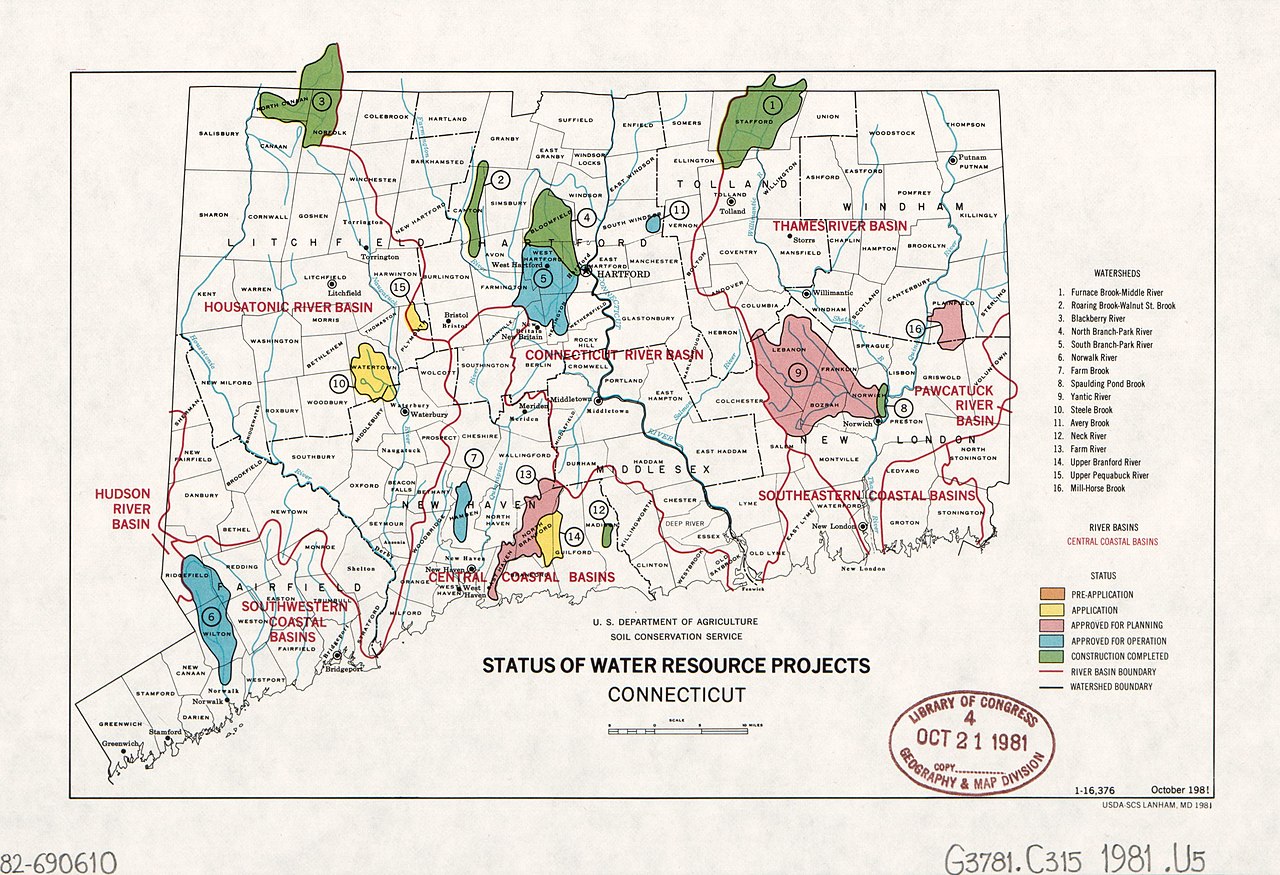
The Surface Mining Control and Reclamation Act of 1977 established a federal program to reclaim land and water damaged by coal mining, with particular focus on mines that operated after August 3, 1977. However, abandoned mines from before that date—often located in Appalachia and other coal regions—have left behind degraded landscapes and polluted waterways, particularly from acid mine drainage that continues to contaminate streams and groundwater. States have approved reclamation plans but lack sufficient federal funding and flexible mechanisms to engage private entities and nonprofits in cleanup work at these legacy sites. The Community Reclamation Partnerships Act authorizes states with approved reclamation programs to enter into memoranda of understanding with federal and state agencies to address mine drainage pollution, establishing coordinated strategies for water quality improvement, monitoring, and long-term treatment system maintenance. The bill also creates a new "Community Reclaimer" partnership model, allowing states to contract with private companies, nonprofits, or other entities to remediate abandoned mine lands. The Department of the Interior must approve Community Reclaimer projects within 120 days if they meet criteria including technical capability, financial resources, consistency with state plans, and state assumption of liability for project performance (except gross negligence or intentional misconduct). States must conduct public notice and comment periods before submitting memoranda, with at least 15 days' notice and one public meeting in an accessible location. The Department of the Interior and Environmental Protection Agency have 120 days to approve or disapprove memoranda. Community Reclaimers may reprocess recovered mine materials and use sale proceeds to offset remediation costs, with revenues also reimbursing federal agencies. The program sunsets September 30, 2032, creating a defined timeframe for implementation and evaluation of this partnership model.
Environmental Protection
Latest updateMay 13, 2025
Passed/agreed to in House: On motion to suspend the rules and pass the bill Agreed to by voice vote. (text: CR H1970-1971)
Environmental Protection
International AffairsHR-36-119Latest action: May 6, 20250 readersPassed Chamber
MEGOBARI Act
Sponsored by Joe Wilson
The United States has long supported Georgia's democratic development and Euro-Atlantic integration following the country's independence from the Soviet Union. However, in recent years, Georgia has experienced significant democratic backsliding, including restrictions on civil society, independent media, and opposition parties. Simultaneously, the Georgian government has strengthened ties with Russia, China, and other authoritarian regimes while distancing itself from Western partners. The U.S. government has expressed concern that these trends undermine regional stability and contradict Georgia's constitutional commitment to European Union and NATO membership, which enjoys overwhelming public support among Georgian citizens. The MEGOBARI Act directs the Secretary of State to suspend the United States-Georgia Strategic Partnership Commission until the Georgian government demonstrates renewed commitment to democracy and Euro-Atlantic integration. The bill requires the State Department, in coordination with the Director of National Intelligence and the Secretary of Defense, to submit a classified report within 180 days examining Russian intelligence penetration in Georgia, including Chinese influence and potential Russian-Chinese cooperation. Additionally, the Secretary of State and the Administrator of the United States Agency for International Development must develop a comprehensive five-year strategy within 90 days outlining U.S. bilateral objectives, assessing Georgia's continued status as a top regional aid recipient, and evaluating whether to maintain current investment levels in Georgian projects and civil society support. The strategy will guide future U.S. assistance decisions and diplomatic engagement with Georgia. Implementation begins immediately upon enactment, with intelligence assessments and strategic planning completed within the specified timeframes. The bill does not specify new funding but directs agencies to evaluate existing assistance levels and determine whether current resource allocations remain appropriate given Georgia's political trajectory. These actions may influence Georgia's foreign policy orientation, affect bilateral trade and security cooperation, and signal U.S. commitment to supporting democratic governance and civil society in the region, potentially affecting other countries' calculations regarding Western engagement in Eastern Europe and the South Caucasus.
International Affairs
Latest updateMay 5, 2025
Passed/agreed to in House: On motion to suspend the rules and pass the bill Agreed to by the Yeas and Nays: (2/3 required): 349 - 42 (Roll no. 116). (text: CR H1824-1826)

International Affairs
Government Operations and PoliticsHR-22-119Latest action: Apr 10, 202519 readersPassed Chamber
SAVE Act
Sponsored by Chip Roy
Under current federal law, the National Voter Registration Act of 1993 allows states to register voters without requiring documentary proof of citizenship at the time of registration. States may accept voter registration applications through motor vehicle licensing offices, mail-in forms, and other agencies, with citizenship typically verified through other means or attestation. This framework has created inconsistency across states in how citizenship is confirmed before individuals are added to voter rolls for federal elections. The SAVE Act amends the National Voter Registration Act to require that states not register any individual to vote in federal elections unless the applicant presents documentary proof of United States citizenship at the time of registration. The bill defines acceptable citizenship documents to include a REAL ID-compliant identification card, valid U.S. passport, military identification with military service records, government-issued photo ID showing U.S. birthplace, or a certified birth certificate paired with government photo ID. States must verify citizenship through these documents or through alternative processes established by the state, where applicants may submit other evidence and sign an attestation under penalty of perjury. The Election Assistance Commission must develop a uniform affidavit for officials to use when approving applicants without documentary proof. States must implement these requirements within 30 days of enactment and establish ongoing programs to identify non-citizens currently registered using data from the Department of Homeland Security's SAVE system, Social Security Administration verification services, state identification agencies, or other citizenship-confirmation databases. States must also modify motor vehicle licensing applications, mail voter registration forms, and voter registration agency procedures to require citizenship documentation. Election officials must notify applicants submitting mail registrations of the citizenship documentation requirement and provide instructions for compliance. States must ensure reasonable accommodations for individuals with disabilities seeking to present citizenship documents.
Government Operations and Politics
Latest updateApr 10, 2025
Passed/agreed to in House: On passage Passed by the Yeas and Nays: 220 - 208 (Roll no. 102).
Government Operations and Politics
Public Lands and Natural ResourcesHR-168-119Latest action: Apr 4, 20250 readersIn Committee
TORCH Act
Sponsored by Doug LaMalfa
Current federal law requires extensive environmental review and consultation before the Department of Agriculture and Department of the Interior can remove trees or manage vegetation on public lands, even when those actions aim to reduce wildfire risk. The National Environmental Policy Act of 1969 mandates detailed environmental assessments for most forest management projects, and the Endangered Species Act requires consultation with wildlife agencies. These requirements, while designed to protect environmental values, can delay hazard reduction work by months or years. Additionally, timber sales on national forests face appraisal requirements and acreage caps that limit their use as a tool for removing dangerous trees and excess fuel. The TORCH Act streamlines federal forest management by authorizing the Department of Agriculture and Department of the Interior to bypass certain environmental reviews for specific wildfire-reduction activities. The bill establishes categorical exclusions—a regulatory mechanism that exempts projects from full environmental assessment—for high-priority hazard tree removal within 300 feet of roads or recreation sites (up to 3,000 acres per project), and for vegetation management along electrical utility rights-of-way. It raises the acreage limit for wildfire resilience projects from 3,000 to 10,000 acres under the Healthy Forests Restoration Act. The bill also increases the timber sale threshold from $10,000 to $50,000, allowing the Secretary to sell forest products without appraisal during extreme risk events like catastrophic wildfires or disease outbreaks. Implementation begins immediately upon enactment, with the Department of Agriculture required to develop the hazard tree categorical exclusion within one year. The bill funds these activities through timber sale revenues and utility company proceeds from vegetation removal, rather than appropriating new federal dollars. Utility companies can now remove hazardous trees near power lines under special use permits without separate timber sales. The changes apply retroactively to good neighbor agreements initiated after 2018, allowing states, tribes, and counties to retain timber sale revenues for restoration work. These streamlined processes are expected to accelerate fuel reduction projects, though they reduce opportunities for public comment and environmental review on affected lands.
Public Lands and Natural Resources
Latest updateApr 4, 2025
Referred to the Subcommittee on Forestry and Horticulture.

Public Lands and Natural Resources
Crime and Law EnforcementHR-60-119Latest action: Mar 25, 20254 readersIn Committee
Knife Owners’ Protection Act of 2025
Sponsored by Andy Biggs
Currently, knife transportation laws vary dramatically across states and localities. Some states prohibit certain blade lengths, designs, or types entirely, while others allow broad carry rights. A person legally transporting a knife through one state may face arrest in an adjacent state with stricter rules, even if the knife remains secured in a vehicle or luggage. This patchwork of conflicting regulations creates legal uncertainty for travelers, hunters, outdoor enthusiasts, and others who lawfully possess knives in their home states but may inadvertently violate laws while crossing state lines. The Knife Owners' Protection Act of 2025 establishes a federal right to transport knives interstate, overriding state and local restrictions. The law requires that individuals not otherwise prohibited by federal law may transport knives from any place where they may lawfully possess them to any other place where lawful possession is permitted, provided the knives are properly secured during transit. For motor vehicles, knives must be inaccessible from the passenger compartment or locked in a container, glove compartment, or console. For air travel, knives must be in locked containers outside the passenger cabin. For other transportation methods, knives must be in locked containers. Emergency safety knives designed for cutting seat belts may be carried in vehicle passenger compartments but remain prohibited from aircraft cabins. The law takes effect immediately upon enactment with no specific funding mechanism required, as it primarily restricts state enforcement rather than creating new federal programs. Individuals arrested or detained in violation of the act's protections may sue for damages and recover attorney's fees if they prevail. States and localities retain authority to enforce their own knife laws against individuals not in compliance with the federal transportation requirements, but cannot arrest someone merely for possessing a lawfully-owned knife during interstate travel if it is properly secured. The burden of proof falls on states to demonstrate non-compliance with the act's specific storage and transport requirements in criminal proceedings.
Crime and Law Enforcement
Latest updateMar 25, 2025
Ordered to be Reported (Amended) by the Yeas and Nays: 13 - 10.
Crime and Law Enforcement
Government Operations and PoliticsHR-185-119Latest action: Mar 14, 20253 readersIn Committee
Responsible Legislating Act
Sponsored by James McGovern
Federal law currently requires livestock market reporting through the Agricultural Marketing Act of 1946 and the Livestock Mandatory Reporting Act of 1999, with provisions set to expire at the end of 2024. These laws mandate that packers and dealers report prices and volumes for cattle, hogs, and lambs to help maintain market transparency and protect farmers from unfair pricing practices. The reporting requirements have been extended multiple times since their original enactment to ensure continuous market oversight. The Responsible Legislating Act extends the livestock mandatory reporting requirements by one year, moving the expiration date from 2024 to 2025. The Department of Agriculture will continue administering these reporting obligations through the existing framework, requiring packers and dealers to submit pricing and transaction data as they currently do. The bill also directs the Department of Labor's Assistant Secretary for Veterans' Employment and Training, in coordination with the Department of Veterans Affairs, to establish or update a public website where veterans can search for registered apprenticeship programs by occupation and location, including program costs, contact information, veteran endorsements, and certifications earned. The livestock reporting extension takes effect immediately upon enactment and requires no new funding, as it maintains existing agency operations. The apprenticeship website must be established and searchable by occupation and location, with information updated on apprenticeship.gov or any successor platform. Additionally, the bill amends federal retirement law to allow federal employees in high-risk positions—law enforcement officers, firefighters, air traffic controllers, customs officers, nuclear materials couriers, and Capitol and Supreme Court Police—who become permanently disabled on duty to transition to non-covered civil service positions within their agency while retaining their covered-position retirement benefits, provided the transition occurs within three days of separation from their original role.
Government Operations and Politics
Latest updateMar 14, 2025
Referred to the Subcommittee on Livestock, Dairy, and Poultry.
Government Operations and Politics